What Comes After Survival Mode? It’s a Journey of Rebuilding
One of our family friends had a series of tragedies in his life. His brought up was done by one of his uncles because his parents had died. He was sent to a hostel in another city and was unfortunately bullied there because of his background. He was good at studies so he worked hard and got selected in a very prestigious medical college in Pakistan. 8 years later, he was a well-settled doctor and also had a lover. They got married but the trails of life led the marriage to divorce. Left alone he, we were also devastated by what happened.
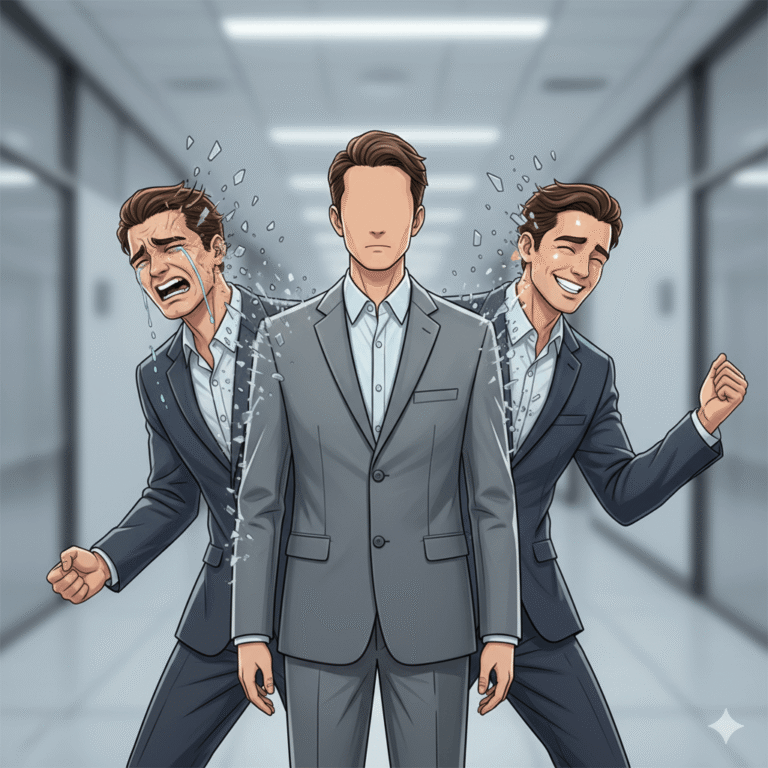
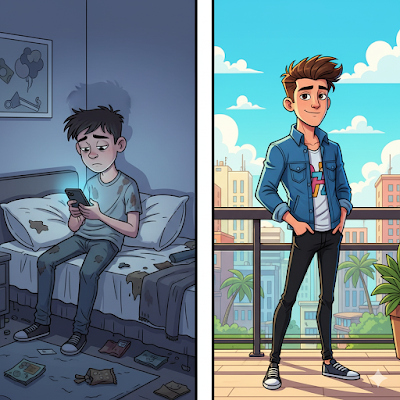
1 or 2 years later, one of my aunts introduced her to a girl. They started dating and a year later when I went back home for a vacation, I met him. The couple had an adorable baby girl and apparently were very happy. There is the tea tradition in Pakistani gatherings. Tea is served after food and it is considered necessary. We were drinking tea together and I noticed he was still restless and confused. He appeared confident while posing with his wife and daughter but his gaze that would move a million times around in a second told me that his soul was yet unhealed and was waiting for a perfect moment.
If this is you, you are not broken. You are not ungrateful or addicted to chaos.
You are experiencing the crisis of life after survival mode. It is one of the most documented — and least discussed — phenomena in human psychology.
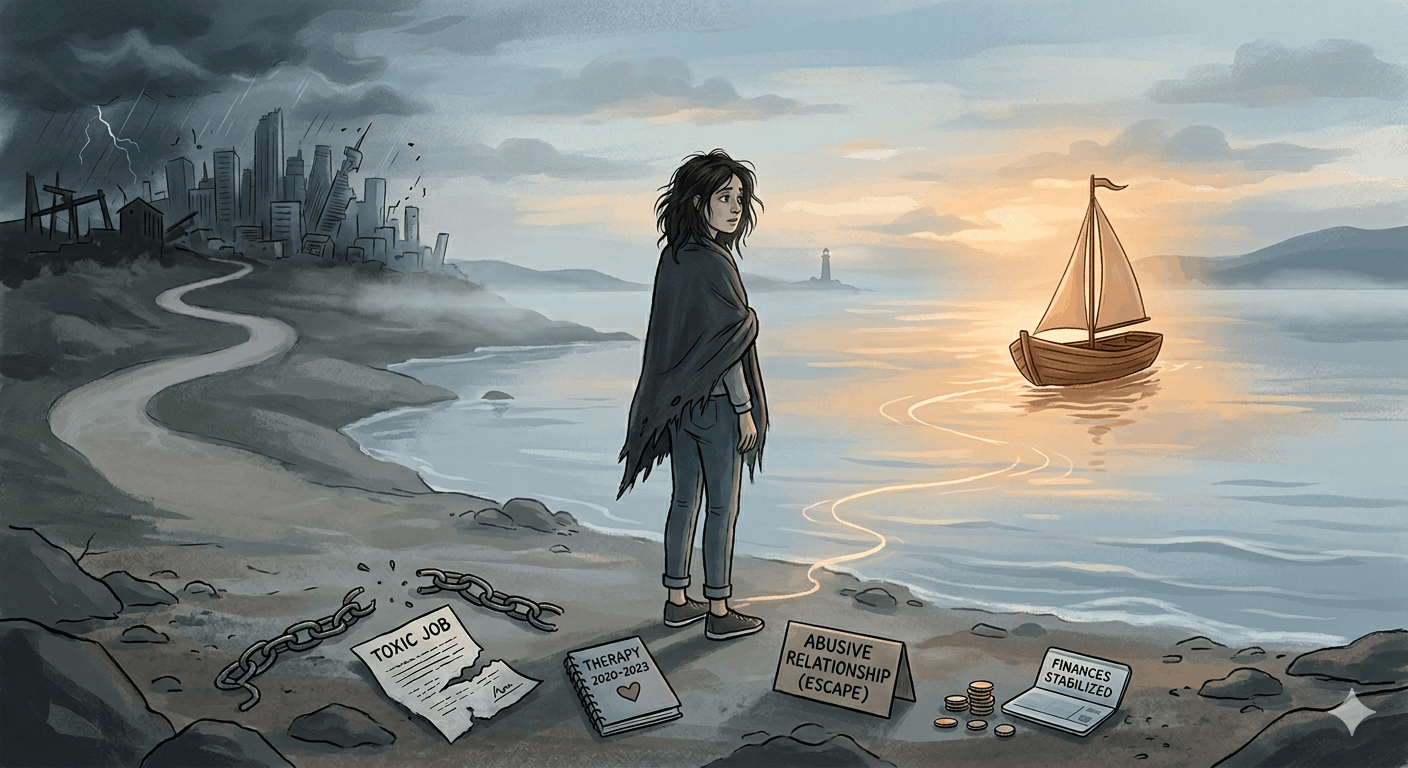
This is the definitive guide to understanding why “things getting better” can feel so wrong—and how to navigate the destabilizing terrain of life after survival mode.
🌈What Is Life After Survival Mode?
Life After Survival Mode refers to the psychological, physiological, and existential transition period that occurs when a person moves from a state of chronic threat, scarcity, or instability into a state of relative safety, stability, and abundance.
This transition is characterized by a paradoxical set of symptoms:
- Emotional numbness instead of joy
- Confusion instead of clarity
- Restlessness instead of peace
- Guilt instead of gratitude
- Destabilization instead of the expected stabilization
Key distinction: This is not depression, though it can mimic it. This is not a relapse. This is the nervous system and identity structure rebooting after years of operating in emergency mode.
🌈The Core Question This Article Answers
“Why do I feel empty, confused, or destabilized now that my life has finally gotten better?”
The short answer: Because your entire nervous system, identity, coping mechanisms, and sense of meaning were built around surviving the crisis. When the crisis ends, the architecture of your self collapses—and rebuilding is disorienting, painful, and lonely.
The long answer is what follows.
🌈 The Psychology of Survival Mode: How Your Brain Adapts to Chaos
To understand why life after survival feels wrong, you must first understand how survival mode rewires you.
🌈What Happens to the Brain in Survival Mode
When you live under chronic threat—whether from abuse, poverty, violence, political instability, caregiving stress, or toxic work environments—your brain undergoes profound adaptations:
| Brain System | Survival Mode Adaptation | Cost of Adaptation |
|---|---|---|
| Amygdala (threat detection) | Becomes hyperactive; constantly scanning for danger | Sees threats everywhere, even in safety |
| Prefrontal Cortex (executive function, future planning) | Downregulates activity; short-term focus dominates | Difficulty planning for a future you didn’t expect to have |
| Hypothalamus-Pituitary-Adrenal (HPA) Axis (stress response) | Chronically elevated cortisol and adrenaline | Body becomes dependent on stress hormones; calm feels like withdrawal |
| Dopamine System (reward, motivation) | Rewires to find relief in “crisis averted” rather than positive experiences | Safety doesn’t feel rewarding; boredom feels unbearable |
| Default Mode Network (sense of self, identity) | Identity becomes fused with “the fighter,” “the survivor,” “the one who endures” | Losing the fight means losing your sense of who you are |
Verdict: Your brain did exactly what it was supposed to do. It kept you alive. But the very mechanisms that saved you now make peace feel like a foreign country where you don’t speak the language.
🌈The Five Core Features of Survival Mode Identity
When you live in survival mode long enough, your identity reorganizes around five pillars:
- Hypervigilance as Competence: You are praised for “always being prepared,” “reading the room,” “anticipating problems.” This is not a personality trait—it is a trauma adaptation.
- Crisis Management as Purpose: You derive meaning and self-worth from handling emergencies. When there is no emergency, you feel purposeless.
- Dissociation as Functioning: You learned to disconnect from your body and emotions to keep going. Now that you’re safe, you don’t know how to feel.
Related: Anticipatory Regret| Holding Back from Full Attachment and Feeling Loss Before It Happen - Scarcity Mindset as Protection: Hoarding resources, overpreparing, assuming the worst—these kept you alive. In abundance, they become prisons.
- Chaos as Familiar: You may not like chaos, but you know it. Safety is unfamiliar, and unfamiliar feels dangerous.
If you recognize yourself in these pillars, you are not broken. You are exactly where anyone would be after surviving what you survived.
🌈Why “Things Getting Better” Feels Empty: The Seven Paradoxes of Post-Survival Life
This section is the heart of the article. Each paradox explains a specific flavor of post-survival emptiness.
🌈Paradox 1: The Absence of Crisis Creates a Void, Not Relief
The experience: You spent years waiting for the other shoe to drop. Now, it hasn’t. And instead of relief, you feel hollow.
The explanation: Your brain produced stress hormones to keep you alert. Those hormones also provided a perverse form of energy and meaning. Without the crisis, your brain doesn’t know what to do with itself. The void is the absence of the enemy you were fighting.
The clinical term: This is related to post-traumatic growth inversion—where the skills that helped you survive become obstacles to thriving.
🌈Paradox 2: Safety Feels Unsafe
The experience: You finally have a stable home, a loving partner, a secure job. And you feel more anxious than before. You’re waiting for it to be taken away.
The explanation: Your nervous system has been trained to associate “calm” with “the pause before the next disaster.” In your experience, peace has always been followed by pain. Your body is not rejecting safety—it is protecting you from the anticipated crash.
The clinical term: Foreboding joy (Brené Brown) or anticipatory anxiety—the inability to trust positive experiences because you’ve learned they are temporary.
Related: Anticipatory Regret| Holding Back from Full Attachment and Feeling Loss Before It Happen
🌈Paradox 3: You Miss the Chaos (And Feel Ashamed About It)
The experience: A small part of you misses the drama, the intensity, the urgency of survival mode. You feel guilty and confused by this.
The explanation: Chaos provides dopamine through its unpredictability and the relief that follows a crisis averted. Safety provides a lower, steadier baseline of dopamine. For a brain accustomed to chaos, safety can feel boring—and boredom, to a survival brain, feels like death.
The clinical term: Trauma bonding to a lifestyle—not just to a person, but to a pattern of living.
🌈Paradox 4: Your Coping Mechanisms No Longer Work, But You Don’t Have New Ones
The experience: The strategies that got you through—overworking, numbing out, people-pleasing, controlling everything—are now destroying your relationships, your health, or your peace. But you don’t know what to do instead.
The explanation: Survival coping mechanisms are optimized for short-term threat reduction, not long-term thriving. In safety, these same behaviors become maladaptive. But you haven’t yet learned the skills of regulation, vulnerability, and trust.
The clinical term: Adaptive coping becoming maladaptive—a common phenomenon in the transition from crisis to stability.
🌈Paradox 5: You Don’t Know Who You Are Without the Fight
The experience: You defined yourself as “the one who survived,” “the strong one,” “the fighter.” Now that you’re not fighting, you feel identityless.
The explanation: When survival is your primary occupation, your identity condenses around it. Without the struggle, you face an existential question: Who am I when I’m not overcoming something?
The clinical term: Identity diffusion—a loss of the integrated sense of self, often seen after major life transitions or the end of a long-term stressor.
Related: Delayed Emotional Processing- Why Emotions and Feelings Arrive Late
🌈Paradox 6: Gratitude Feels Impossible
The experience: People tell you to “be grateful” for how far you’ve come. You know you should be. But you can’t feel it. You feel numb, or worse, resentful.
The explanation: Gratitude requires the capacity to be present and vulnerable. Survival mode taught you to stay in the future (planning for threats) or the past (processing trauma). The present moment—where gratitude lives—feels unsafe and unfamiliar.
The clinical term: Anhedonia (inability to feel pleasure) secondary to chronic stress, not necessarily clinical depression.
🌈Paradox 7: You’re Destabilized by Stability
The experience: Your external circumstances are more stable than ever. But internally, you feel more anxious, more confused, more unmoored.
The explanation: Stability removes the external structure that survival mode provided. When every day was a crisis, you knew what to expect: more crisis. Now, the unpredictability of peace—the openness of possibility—is itself overwhelming.
The clinical term: Transition stress or adjustment disorder with mixed anxiety and depressed mood—a recognized condition triggered by positive or negative life changes.
🌈Who Experiences Life After Survival Mode? A Nuanced Breakdown
This phenomenon does not affect everyone equally. Understanding the specific contours for your context is essential for self-compassion.
| Population | How Life After Survival Mode Shows Up |
|---|---|
| Trauma Survivors (Abuse, Violence, Neglect) | Safety triggers flashbacks or hypervigilance because the body remembers that calm preceded past betrayals. Difficulty trusting that “good” will last. |
| Refugees & Asylum Seekers | After resettlement, the absence of visible threat can paradoxically increase anxiety. The brain continues scanning for dangers that are no longer there. Identity loss is profound: “Who am I if not a refugee?” |
| First-Generation Achievers | After achieving the stability your family sacrificed for, you may feel empty, guilty, or disconnected from both your origin culture and your new life. |
| Post-Caregivers | After a loved one dies or no longer needs full-time care, caregivers often experience a devastating void. Their entire identity and schedule revolved around caregiving. |
| Burnout Recoverees | After leaving a toxic job or finishing a grueling project, many experience a “crash” of depression, anxiety, or meaninglessness rather than relief. |
| People Who Escaped High-Control Groups (Cults, Extremism) | Freedom feels more disorienting than captivity. Every decision—what to wear, what to believe, who to trust—becomes overwhelming. |
| Long-Term Illness Survivors | After remission or stabilization, the absence of the “fight” can feel like a loss of purpose. The medical identity was central; without it, there is a void. |
| People Who Grew Up in Poverty | Financial stability triggers guilt, impostor syndrome, and a persistent fear of “falling back.” Relaxation feels irresponsible. |
If you see yourself here, know this: Your experience is not a sign of weakness. It is a sign that your adaptation was deep, effective, and now requires conscious integration.
🌈The Neurobiology of Post-Survival Emptiness: What’s Happening in Your Body
🌈The Allostatic Load Hangover
Allostatic load is the cumulative wear and tear on the body from chronic stress. When survival mode ends, the body does not instantly reset. It has been running on overdrive for months or years.
The “hangover” includes:
- Elevated baseline cortisol for up to 6–12 months after stressor removal
- Inflammatory markers (CRP, IL-6) that remain high
- Disrupted circadian rhythms (sleep-wake cycles, hormone release)
- Downregulated dopamine receptors (making pleasure feel muted)
What this means: Your body is physically incapable of feeling “good” immediately after safety is achieved. You are not broken. You are recovering from a systemic injury.
🌈The Withdrawal Analogy (Clinically Accurate)
Chronic stress elevates cortisol and adrenaline. These are not just “stress chemicals”—they are neuroactive substances that your brain becomes dependent on for normal functioning.
When you enter safety and these chemicals drop, you can experience physiological withdrawal:
- Anxiety (the brain craving cortisol)
- Restlessness (the brain craving adrenaline)
- Emotional numbness (downregulated receptors)
- Sleep disturbances (dysregulated HPA axis)
This is not a metaphor. This is endocrinology. The transition out of survival mode can feel like coming off a drug—because, in a very real sense, you are.
🌈The Default Mode Network Recalibration
The Default Mode Network (DMN) is the brain system responsible for your sense of self, autobiographical memory, and future planning.
In survival mode, the DMN becomes overconnected to threat-detection regions. Your self-narrative becomes: “I am someone who must constantly be on guard.”
When safety arrives, the DMN needs to recalibrate to a new self-narrative: “I am someone who is safe and can relax.”
This recalibration takes time—months to years. During this period, you may feel:
- Disconnected from your past self
- Unsure of who you are now
- Like you’re “wearing a costume” of a functional person
This is not identity loss. This is identity reconstruction. And reconstruction is messy, slow, and nonlinear.
🌈How to Navigate Life After Survival Mode: An Evidence-Based, Trauma-Informed Protocol
The following strategies are drawn from:
- Polyvagal Theory (Porges)
- Sensorimotor Psychotherapy (Ogden)
- Acceptance and Commitment Therapy (Hayes)
- Post-Traumatic Growth research (Tedeschi & Calhoun)
- Somatic Experiencing (Levine)
🌈Phase 1: Validate Before You Fix (Weeks 1–4)
Do not try to “fix” the emptiness immediately. The emptiness is not a problem to be solved; it is a signal to be understood.
Practices:
- Name it. Say out loud: “I am experiencing the post-survival transition. The emptiness is not a sign that something is wrong with me. It is a sign that my body is recalibrating.”
- Normalize it. Read this article again. Show it to a trusted person. You are not alone. This is a documented phenomenon.
- Track without judgment. Each day, note:
- One moment of emptiness
- One moment of anything else (even neutral)
- One moment of curiosity about the process
🌈Phase 2: Titrate Safety (Weeks 2–8)
You cannot force your nervous system to trust safety. You must introduce safety in small, tolerable doses.
Practices:
- The 10-Second Safety Check: Several times a day, pause and ask: “Am I safe in this exact moment?” (Not “Will I be safe in the future?”—right now.) Answer honestly. Often, the answer is yes. Let that land.
- Safety Anchors: Identify 3–5 micro-moments of safety that you can access anywhere:
- Feet flat on the floor
- Back against a wall or chair
- Hand on your own heart
- A specific breath pattern (e.g., 4-second inhale, 6-second exhale)
- Anticipatory Joy Practice (Counter to Foreboding Joy): When something good happens, instead of waiting for the crash, say: “This is real. This is happening. I am allowed to feel it.” Start with small things (a warm cup of tea, a kind text).
🌈Phase 3: Grieve the Survival Self (Weeks 4–12)
You may not realize it, but you need to grieve. The version of you that survived was fierce, capable, and necessary. That version is not “bad”—it is retiring from a job well done.
Practices:
- Write a letter to your survival self. Thank them. Acknowledge what they carried. Tell them: “You kept me alive. I don’t need you to fight anymore. You can rest now.”
- Create a ritual of transition. Burn a symbolic object (a list of old coping mechanisms, a photo from that era). Plant something. Change your hair. Mark the transition physically.
- Allow the anger and grief. You may be angry that you had to survive at all. Grieve the years lost to survival. This is not self-pity; it is necessary mourning.
🌈Phase 4: Experiment with Small Pleasures (Weeks 6–16)
Your dopamine system needs to be retrained to respond to positive experiences. This is not about forcing joy—it is about creating opportunities for joy to arise.
Practices:
- Low-Stakes Pleasure Experiments: Each week, try one small activity that might feel good. No pressure to actually enjoy it.
- Week 1: Buy a fancy tea or coffee.
- Week 2: Sit outside for 10 minutes without a phone.
- Week 3: Listen to one song you used to love.
- Week 4: Cook something simple that smells good.
- Curiosity over Expectation: Instead of “I should feel happy about this,” say “I’m curious what I will feel.”
- The Pleasure Log: Each day, write down one moment when your body felt less bad—not good, just less bad. A stretch that felt okay. A moment of cool air. This trains the brain to notice positive data.
Related: Overthinking Is Not Over-Analyzing: The Difference Between Problem-Solving and Mental Looping
🌈Phase 5: Rebuild Identity Slowly (Months 3–12)
You cannot rush identity reconstruction. But you can seed it.
Practices:
- The “Who Am I Now?” Inventory: Write down 10 things that are true about you that are not about survival.
- I like dogs.
- I am good at listening.
- I enjoy early mornings.
- I value honesty.
(If you can only list 2 or 3 or even 1, that’s fine. Start there.)
- Small Commitments to the Future: Survival mode erodes future-orientation. Rebuild it through tiny commitments:
- “Next Saturday, I will go for a 10-minute walk.”
- “In two weeks, I will call that friend.”
- “Next month, I will try that new recipe.”
- Identity Experimentation: Try on different versions of yourself like clothes.
- For one day, act as if you are someone who enjoys rest.
- For one hour, act as if you are someone who trusts others.
- Notice what fits and what doesn’t. No commitment required.
🌈Phase 6: Seek Integration, Not Happiness (Months 6–18)
The goal of life after survival mode is not happiness. The goal is integration—the ability to hold safety, discomfort, meaning, and ordinariness all at once.
Practices:
- Both/And Statements: When you feel empty or confused, complete this sentence:
- “I am grateful for my safety AND I feel lost. Both are true.”
- “Things are better AND I am struggling. Both are true.”
- Meaning-Making, Not Meaning-Finding: You do not need to find the “reason” you survived. You can create meaning through small, daily choices that align with your values.
- Professional Support: This is not a sign of failure. A trauma-informed therapist, somatic practitioner, or support group can be the difference between years of suffering and months of integration.
🌈FAQ: Your Most Pressing Questions About Life After Survival Mode—Answered
Q: How long does this phase last?
A: There is no universal timeline, but clinical observation suggests:
- Acute transition phase: 1–3 months (most disorienting)
- Reorganization phase: 3–12 months (gradual stabilization)
- Integration phase: 12–24+ months (new identity and nervous system baseline)
Factors that influence duration: length of survival mode, severity of trauma, available support, access to therapy, and baseline neurobiology.
Q: Is this depression? Should I be on medication?
A: This can look like depression (anhedonia, low energy, emotional numbness) but it is not always clinical depression. Key differences include:
| Post-Survival Transition | Clinical Depression |
|---|---|
| Emptiness fluctuates with context | Emptiness is pervasive and persistent |
| You can experience moments of relief | Relief feels impossible |
| You have hope about the future (even if distant) | Hopelessness is core |
| Responds to titration and safety practices | Often requires medication and structured therapy |
If you are unsure, see a psychiatrist or therapist for an assessment. Many people benefit from a combination of medication (to stabilize mood) and the practices above (to rebuild capacity).
Q: What if I feel worse than I did in survival mode?
A: This is common and does not mean you made a mistake by seeking safety. There are two reasons this happens:
- Unmasking: In survival mode, you were too busy fighting to feel. Safety allows suppressed emotions (grief, anger, fear) to surface. You are not worse—you are finally feeling what was always there.
- Loss of Structure: Survival mode provided a brutal but clear structure: fight, endure, repeat. Safety provides openness, which requires internal structure you may not yet have.
The solution is not to return to survival mode. The solution is to build internal structure slowly.
Related: Identity Lag- What Happens When Life Changes Faster than Self Image
Q: I feel guilty that I’m struggling when others have it so much worse. How do I stop that?
A: Guilt about struggling is a form of comparative suffering—the belief that your pain is only valid if it exceeds someone else’s. This is a trap.
Reframe: Your struggle does not take anything away from others. You can acknowledge that others face worse circumstances and that your experience is real. Both are true.
Practice: When guilt arises, say: “My suffering is not a competition. I am allowed to struggle even when others struggle more. My healing matters.”
Q: What if I don’t know what I want or like anymore?
A: This is one of the most common post-survival symptoms. Survival mode erodes access to preferences because preferences were a luxury you couldn’t afford.
Solution: Treat discovery of preferences as an experiment, not a test.
- Try 5 different breakfasts. Which one feels least bad? That’s a data point.
- Listen to 3 genres of music. Which one makes your body feel less tense?
- Spend time with different people. Who leaves you feeling more regulated?
You are not supposed to know what you want yet. You are in the discovery phase.
Q: Can life after survival mode ever feel good? Or will I always feel this emptiness?
A: Yes, it can feel good. But “good” will likely look different than you imagined.
What “good” often looks like after survival mode:
- Not euphoria, but quiet contentment
- Not constant excitement, but periods of peace
- Not an absence of struggle, but the capacity to struggle without collapse
- Not a permanent state, but returning to yourself more quickly after a trigger
The emptiness is not permanent. It is a transitional state. As your nervous system recalibrates and your identity reconstructs, the emptiness will be replaced by a wider range of emotional experiences—including joy, connection, and meaning.
🌈When to Seek Professional Help (Immediate)
If you experience any of the following, please reach out to a mental health professional or crisis line:
- Suicidal ideation (thoughts of ending your life)
- Inability to care for basic needs (eating, bathing, leaving bed for multiple days)
- Self-harm (cutting, burning, hitting)
- Psychosis (hearing voices, paranoid delusions, disorganized thinking)
- Substance use escalating to dangerous levels
Crisis Resources:
- 988 Suicide & Crisis Lifeline (US) – Call or text 988
- Crisis Text Line – Text HOME to 741741
- International Resources – Visit findahelpline.com
🌈Conclusion: You Are Not Lost. You Are Rebuilding.
Life after survival mode is one of the most disorienting, lonely, and misunderstood transitions a human being can experience.
You fought for safety. You earned it. And now that you have it, you feel empty, confused, or destabilized.
This does not mean you made a mistake. It does not mean you are broken or you secretly preferred the chaos.
It means you are a living organism that adapted to a hostile environment—and now you are learning to live in a different one. That learning takes time. It takes compassion. It takes support.
You are not lost. You are rebuilding.
And rebuilding, while painful, is the foundation of everything that comes next.
🌈Sources & Further Reading
- McEwen, B. S. (2017). Neurobiological and Systemic Effects of Chronic Stress. Chronic Stress, 1, 2470547017692328.
- Porges, S. W. (2011). The Polyvagal Theory: Neurophysiological Foundations of Emotions, Attachment, Communication, and Self-Regulation. Norton.
- Tedeschi, R. G., & Calhoun, L. G. (2004). Posttraumatic Growth: Conceptual Foundations and Empirical Evidence. Psychological Inquiry, 15(1), 1–18.
- Herman, J. L. (2015). Trauma and Recovery: The Aftermath of Violence—From Domestic Abuse to Political Terror. Basic Books.
- Levine, P. A. (2010). In an Unspoken Voice: How the Body Releases Trauma and Restores Goodness. North Atlantic Books.
- Brown, B. (2010). The Gifts of Imperfection. Hazelden Publishing. (Foreboding joy research)
- Harris, R. (2019). ACT Made Simple. New Harbinger Publications.
- Ogden, P., & Fisher, J. (2015). Sensorimotor Psychotherapy: Interventions for Trauma and Attachment. Norton.