De-Extinction: Science, Ethics, CRISPR, and the Real Pros & Cons of Bringing Back Lost Species
Extinction used to feel final — like nature slammed a book shut and tossed the key into deep time. But humans? We’ve never been chill about endings. We bulldozed forests, rewired oceans, heated the planet, and erased species faster than any asteroid ever could. The scoreboard isn’t flattering: forests silenced, coral reefs bleached into bone-white ruins, rivers running empty, predators replaced by livestock.
We didn’t just lose species.
We deleted them.
Yet now, instead of accepting the “L,” science is out here trying to hit Ctrl+Z on extinction. Using ancient DNA, CRISPR gene editing, cloning, and hybrid genome reconstruction, researchers are trying to bring back animals that haven’t walked the Earth in centuries — even millennia.
De-Extinction: Science, Ethics, CRISPR, and the Real Pros & Cons of Bringing Back Lost Species
Woolly mammoths.
Thylacines aka Tasmanian Tiger
Passenger pigeons.
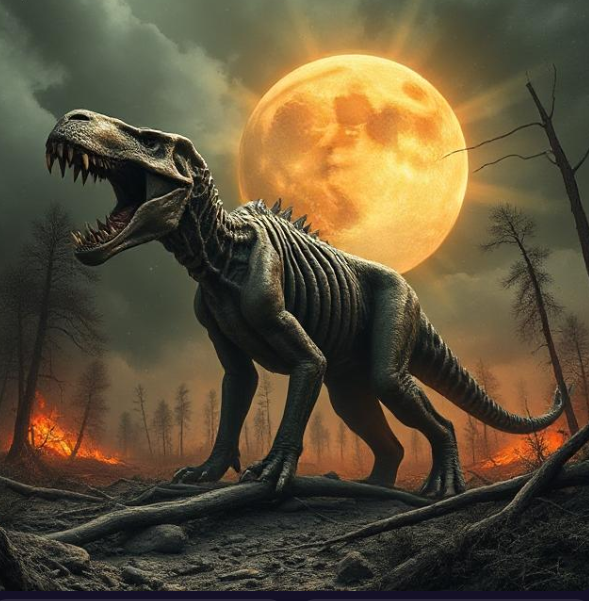
Dire wolves.
And a few “ghost species” you’ve never even heard of.
The question isn’t sci-fi anymore:
Can we bring back extinct animals?
Scientifically, yes — with limits.
Ethically and ecologically? That’s where the plot twists begin.
Let’s break it all down in a way that’s actually useful, accurate, and original.
1. How De-Extinction Really Works?
Most explainers online simplify this process into “find DNA → clone → boom, mammoth.” That’s cute but wrong.
Here’s the real pipeline, based on peer-reviewed research and ongoing projects.
Step 1 — Recovering Ancient DNA
DNA is fragile. Heat, oxygen, bacteria, and time break it apart like a book left in the rain.
Real talk: science cannot recover DNA older than ~1 million years.
That wipes out dinosaurs instantly. Sorry, Jurassic Park.
Potential DNA sources:
- permafrost-preserved mammoths
- museum-preserved thylacines
- passenger pigeon remains
- dried or frozen tissue from recently extinct species
Even “good” samples look like confetti.
Verified source: Orlando et al., Nature Reviews Genetics (2021)
Step 2 — Genome Sequencing: Rebuilding the Book
Once scientists grab fragments, they feed them into sequencing algorithms that:
- match overlaps
- repair degraded regions
- align them to a “reference genome” from a living relative
- build a draft genome
Think of it like rebuilding a shredded novel using a similar book as a guide.
This process takes months or sometimes years. Companies like PacBio and Nanopore use technologies like long-reading sequencing and de Brujin graph algorithms to match and repair degraded DNAs.
Verified source: Meyer et al., Max Planck Institute
Step 3 — Genome Reconstruction: The Hybrid Reality
Let’s be honest: no extinct genome ever comes back 100% pure.
So scientists “fill in the blanks” using DNA from close relatives.
For example:
- mammoth → Asian elephant DNA
- thylacine → numbat DNA
- passenger pigeon → band-tailed pigeon DNA
This creates a proxy species — not an identical clone, but a living functional stand-in that behaves like the extinct animal.
Step 4 — CRISPR Gene Editing
This is where the magic (and chaos) happens.
CRISPR edits specific traits, like:
- mammoth cold-resistance genes
- thylacine metabolic features
- passenger pigeon flocking behavior genes
- woolly fur and fat layer adaptations
Edits are tested in vitro first (in cell culture dishes) because one wrong tweak = non-viable embryo. Tools like Cas9, Cas12a, Base Editing and Prime Editing are used for editing.
CRISPR is basically the robotic surgeon of genomes.
Verified source: George Church Lab, Harvard Medical School, CRISPR Medicine News
Step 5 — Embryo Creation + Surrogacy / Artificial Wombs
Two main routes are used for embryo creation:
A. SCNT Cloning (Somatic Cell Nuclear Transfer)
Used for the Pyrenean ibex in 2003 — the world’s first (and only) de-extinct animal.
It lived minutes before dying of lung failure.
B. Hybrid Embryos in Surrogate Mothers
Example:
Elephants as mammoth surrogates — though ethically complicated because elephants are endangered.
Artificial wombs (in development)
The Weizmann Institute kept mouse embryos alive in artificial wombs for days — a groundbreaking step for future non-surrogate de-extinction.
Verified source: Hanna et al., Nature (2021)
2. Can We Actually Bring Back Extinct Animals?
✔ Species we can realistically revive soon:
- woolly mammoths (as hybrid)
- thylacine (genome nearly complete)
- passenger pigeon
- heath hen
- Pyrenean ibex (already done once)
✘ Species we cannot revive:
- dinosaurs (DNA too old)
- trilobites, marine arthropods
- most megafauna older than 1M years
- any species with no recoverable DNA + no close relative
So yes — de-extinction is scientifically possible, but only for species with:
- viable DNA
- a close living relative
- an ecological niche that still exists
This is a very small list.
Case Study: The Woolly Mammoth Revival Project
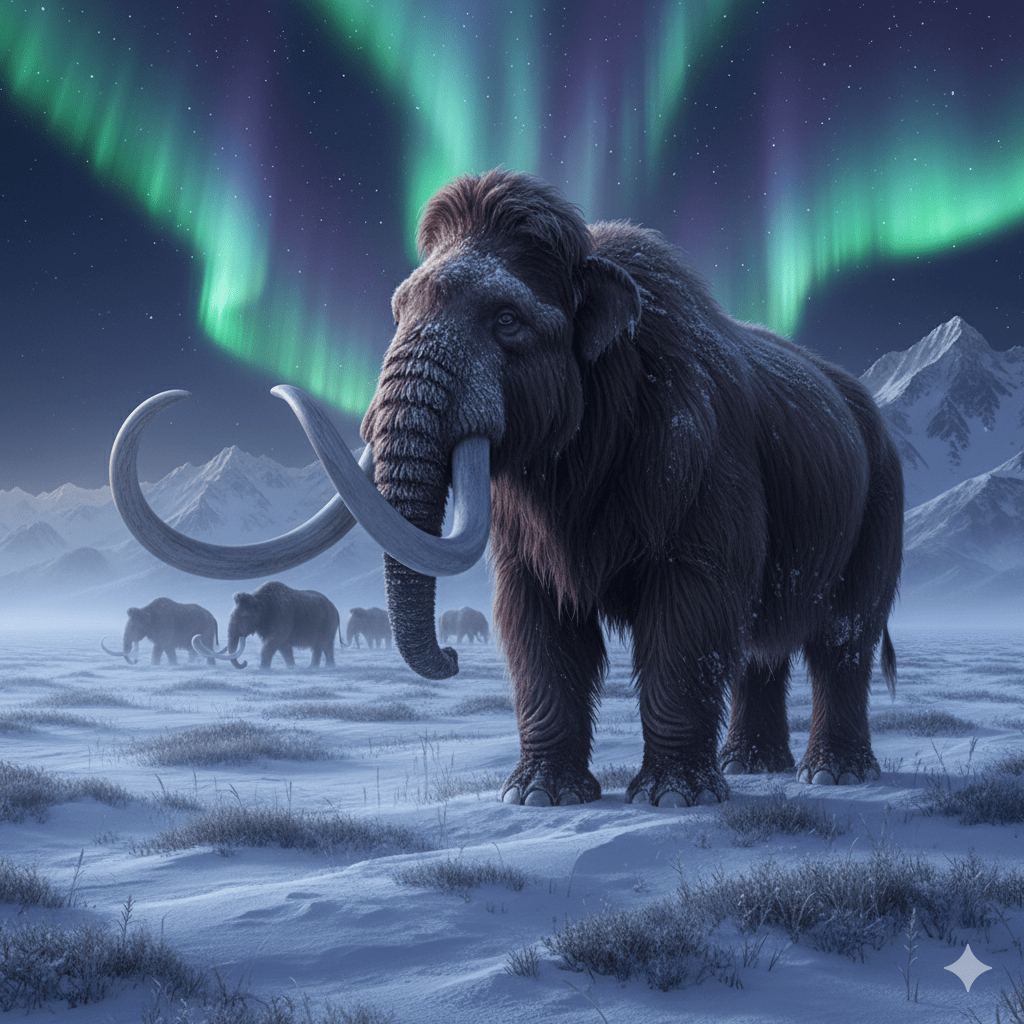
The most high-profile example of modern de-extinction is the Woolly Mammoth Revival Project, led by geneticist Dr. George Church at Harvard and the biotech company Colossal Biosciences. Instead of trying to resurrect a mammoth exactly as it was, researchers aim to create an elephant–mammoth hybrid with cold-adapted traits such as:
- thick insulating fur
- subcutaneous fat layers
- smaller ears
- cold-resistant hemoglobin
How It Works
Researchers are editing the genome of the Asian elephant (the mammoth’s closest living relative) using CRISPR-Cas9. They insert mammoth DNA sequences recovered from preserved remains in Siberian permafrost.
Once edited, the embryonic cells undergo testing to confirm whether the inserted genes behave like authentic mammoth traits. If successful, the goal is to grow the embryo through artificial womb technology to avoid risking endangered Asian elephant surrogates.
Ecosystem Hypothesis
The project is grounded in a climate-related ecological theory:
Mammoths once maintained the Arctic grasslands (“mammoth steppe”) by:
- knocking down trees
- compacting snow
- encouraging grass growth
This activity could help slow permafrost thaw and reduce methane release — meaning a mammoth-like hybrid could theoretically support climate mitigation efforts.
Scientific Concerns
Experts also voice legitimate criticisms:
- Revived hybrids wouldn’t be true mammoths.
- The Arctic ecosystem is not identical to the Pleistocene.
- Climate benefits remain unproven models, not evidence.
- Artificial-womb development isn’t yet viable for long-gestation mammals.
Still, it remains the benchmark case for how CRISPR-based de-extinction may scale in the next decade.
3. The Real Pros of De-Extinction
Pro 1 — Restoring Lost Ecological Functions
Ecosystems aren’t random — they’re Jenga towers. Pull out the wrong block and everything gets shaky.
Examples:
- Mammoths could slow permafrost melt by knocking down trees and maintaining grasslands (observed in Pleistocene Park).
- Passenger pigeons once fertilized huge forests with guano — reviving them may restore nutrient cycles.
- Thylacines could control invasive predators in Tasmania.
These aren’t vibes; these are testable hypotheses in ongoing ecological modeling.
Verified source: Zimov et al., Science (2012)
Pro 2 — Genetic Rescue for Endangered Species
De-extinction tech helps living species too.
- CRISPR can reintroduce lost genetic diversity
- cloned individuals can strengthen weak populations
- gene drives can reduce disease susceptibility
So, if we are able to bring back a mammoth, maybe we can prevent elephants from extinction.
Verified source: Revive & Restore’s Genetic Rescue Toolkit
Pro 3 — Scientific Breakthroughs Spill Into Medicine
De-extinction pushes advances in:
- stem cell reprogramming
- IVF for endangered mammals
- artificial womb technology
- embryonic gene repair
These breakthroughs affect human medicine, not just wildlife.
Pro 4 — Cultural and Educational Impact
Awe has value. People would pay to see a saber-tooth, a mammoth or a dire wolf. It fuels curiosity, education, even conservation and money. Let’s be honest — money is magnet. It attracts organizations, businesses and governments.
4. The Real Cons
Not the soft, PR-friendly ones — the actual issues.
Con 1 — Ecological Misfit Energy
A resurrected animal may simply… not fit. The climate has shifted, forests have shrunk, predators have changed and so does the hunt. A revived species may step out of the lab only to stumble into extinction again.
For instance, if saber-tooth returns back, they would need huge amounts of prey (bison, deer etc.) which may cause a food shortage for other species. They could compete with local predators and may drive them out resulting in an ecosystem imbalance.
Verified source: Sherkow & Greely, Nature Biotechnology
Con 2 — Animal Suffering
Behind every “miracle clone” are failed embryos, sickly births, suffering animals. Surrogates also face health hazards. Born species like Pyrenean Ibex was born with lung defect.
Verified source: Folch et al., Theriogenology (2009)
Con 3 — Mega-expensive vs. Real Conservation
De-extinction isn’t just expensive, it’s astronomical. Cost of excavation of fossils, laboratory equipment for restoration and high-end technologies for genetic editing makes up a large sum. That money could protect rhinos, rainforests, coral reefs, blue whales — species still hanging by a thread.
Consider the cloning of Pyrenean Ibex in 2003 which potentially cost Food and Agricultural Investigation Service of the Government of Aragon of Spain and National Institute of Agrarian Investigation (INRA) of France millions of dollars.
There’s my legit fear that de-extinction is “conservation cosplay” for rich investors.
Con 4 — Human Bias Selects the Species
We bring back “cute” or dramatic species — not ecologically essential ones.
Even though these matter way more for real ecosystems but no one funds:
- extinct moss
- extinct fungi
- extinct pollinating insects
Con 5 — Unintended Chaos:
Ecosystems adapt to loss. It fits things that remain, not the ones that dropped. Drop a resurrected predator into the mix, and the balance tips. We may create new problems instead of fixing old ones.
For instance, saber-tooth has not evolved with species today. With no fear of humans and livestock, they may see those as a prey and wipe them out. They were apex predators of their time, they will hunt a lot. Too many prey killed means fewer plants grazed—vegetation overgrowth and increased risk of fires and habitat shifts.
5. So Should We Do It?
De-extinction is equal parts:
- science
- trauma response
- guilt
- ambition
- ecosystem engineering
- ethical minefield
We’re not just reviving animals.
We’re reviving consequences.
A mammoth is not just fur and DNA — it’s a symbol of everything we changed, broke, and tried to undo.
A thylacine won’t fix colonial hunting policies.
A pigeon won’t fix deforestation.
A clone won’t fix the systems that caused extinction in the first place.
Sometimes the past is gone because we failed it.
Bringing it back doesn’t erase that — but it forces us to confront it.
Conclusion: De-Extinction Isn’t About Lost Animals. It’s About Us.
Every revived genome isn’t just a scientific achievement; it’s a mirror.
A reflection of:
- our environmental track record
- our discomfort with endings
- our obsession with control
- our desire to undo guilt with technology
Can we bring back extinct animals?
Yeah. In some cases, absolutely.
But
Should we?
That’s the part no lab can answer.
Maybe the real extinction at risk isn’t mammoths or pigeons — it’s our ability to accept limits.
And maybe resurrecting the past won’t fix the future unless we change the behaviors that created loss in the first place.
Resources and Further Readings:
1. Church, G. et al., Harvard Wyss Institute
Church’s official lab documentation on de-extinction goals, CRISPR editing, and mammoth genome reconstruction.
Source: Wyss Institute, Harvard University.
https://wyss.harvard.edu/news/bringing-back-the-woolly-mammoth/
2. Pardo, C., et al. (2017). Nature Ecology & Evolution.
Discusses technological limits, ecological uncertainty, and ethical implications of de-extinction.
https://www.nature.com/articles/s41559-016-0002
3. Shapiro, Beth (2015). How to Clone a Mammoth: The Science of De-Extinction. Princeton University Press.
A widely cited, academically respected overview of de-extinction mechanisms, CRISPR feasibility, and ecological risks.
(Physical book; ISBN reference: 978-0691157054)
4. Revive & Restore (Nonprofit Organization)
Documented facts about the 2003 Pyrenean ibex cloning, the black-footed ferret genetic rescue program, and the organization’s current de-extinction agenda.
https://reviverestore.org/
Colossal Biosciences 2023 Blueprint