
How to Create Perennial Content That Still Gets Read Years Later
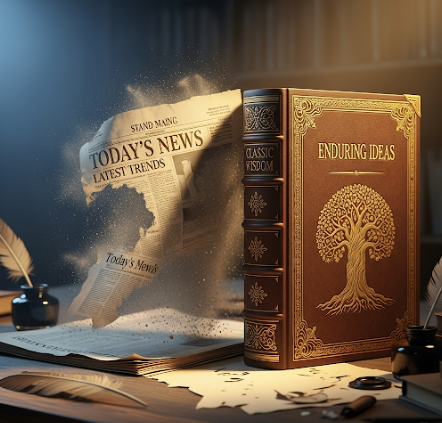
Every day, thousands of headlines flood newspapers, TV screens, and social feeds. Politics. Scandals. Sports. Breaking news that feels urgent at 9 a.m. and disposable by dinner.
The paper that felt important in the morning ends up in the trash by night.
Hi, I’m Minhan, and I write at Readanica. This article isn’t about chasing trends. It’s about building something that outlives them.
How to Make Perennial Content?
If you’ve ever wondered why some books, ideas, and creators stay relevant for decades while others vanish in weeks, this guide is for you.
🌴 Trending vs Perennial Content
Trending content is loud.
Perennial content is quiet — but it lasts.
Trends spike, burn fast, and disappear. Perennial (evergreen) content keeps solving the same human problems again and again, because those problems never really go away.
Think of it like gardening.
A seasonal plant blooms once, then dies.
A perennial plant comes back every year — you don’t replant it, you just maintain it.
Content works the same way.
🌴 What “Perennial” Really Means
You’ve probably heard perennial used in gardening. A plant that doesn’t die after one season — it returns, stronger each time.
Perennial content:
- Solves repeating human problems
- Remains useful despite changing technology
- Ages without losing relevance
- Gains value over time instead of expiring
This isn’t theory. It’s observable.
Researchers studying long-term success patterns (including behavioral economists and productivity scholars) consistently note that high-impact individuals tend to work on compounding projects, not disposable ones. They may not label them “perennial,” but the pattern is the same: long-lasting relevance beats short-term attention.
Related: Why Lo-fi Content is Winning the Internet?
🌴 Why Some Topics Never Die
From the beginning of human history, people have struggled with the same core issues:
- Worry and anxiety
- Relationships and conflict
- Money and survival
- Health and fear of loss
- Purpose, identity, and meaning
Tools change. Context changes. Humans don’t.
That’s why content rooted in human psychology, behavior, and emotion outlives content tied only to events.
🌴 Case Study 1: Dale Carnegie (Published in 1948 — Still Selling)
“How to Stop Worrying and Start Living” was published in 1948.
It’s still:
- Sold globally
- Translated into 60+ languages
- Read by people born decades after the author died
Meanwhile, newspapers from that same year are museum artifacts.
Why?
Because Carnegie didn’t write about events.
He wrote about worry, a condition humans haven’t cured yet.
That’s perennial power.
🌴 Why News and Disasters Trend — But Don’t Endure
Take the 2023 Turkey–Syria earthquake. It dominated global headlines, Google searches, and social feeds. It mattered then and still does.
But earthquakes don’t happen daily.
People don’t wake up every morning searching:
“Earthquake near me?”
They do wake up worrying about:
- money
- relationships
- health
- stress
- uncertainty
That’s why content about anxiety, relationships, or personal finance keeps getting searched — long after headlines fade.
🌴 Case Study 2: Relationships Never Stop Needing Help
John Gray’s “Men Are from Mars, Women Are from Venus” is still read decades after publication.
Why?
Because:
- People enter relationships
- People misunderstand each other
- People fight, heal, divorce, remarry, and repeat the cycle
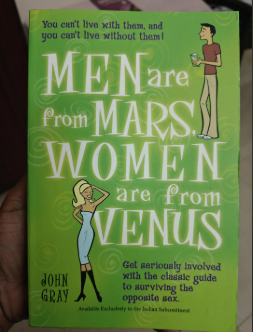
A teenager reads it as a boyfriend.
An adult revisits it as a spouse.
Someone returns after a breakup, looking for clarity.
That’s not a trend. That’s a life loop.
🌴 How to Make Perennial Content
Here’s how to actually create content that lasts.
1. Choose Problems That Repeat
Timeless content is built on recurring human tension, not temporary excitement.
Take mental health. Anxiety, loneliness, and self-doubt existed long before TikTok and will exist long after it. That’s why books like Man’s Search for Meaning by Viktor Frankl (published in 1946) are still read today — not because of marketing tricks, but because humans keep searching for meaning.
Now compare that to most “reaction content” built around a viral controversy. It spikes, it gets clicks, and then it disappears when attention moves on.
Research in behavioral psychology consistently shows that humans return to content that helps them navigate ongoing internal struggles, not one-time external events (APA, 2020). That’s your first signal of perennity.
2. Teach Transferable Skills
Facts age. Skills travel.
A great example is the movie The Shawshank Redemption. When it released in 1994, it flopped at the box office. Weak marketing, tough competition. But the story wasn’t about a year or a trend — it was about hope, patience, and inner freedom. Once people discovered it, they kept passing it on. Today, it’s consistently ranked among the most loved films of all time.
The same principle applies to content. Teaching how to think, how to cope, or how to decide makes your work reusable across different life stages.
This is also why Dale Carnegie’s principles still work. He didn’t teach people about the 1940s — he taught them how humans respond to appreciation, criticism, and fear. Skills age slower than information.
3. Make It Simple
If people can’t come back to it, it won’t last.
Christopher Nolan’s Tenet is a good contrast case. Visually stunning, intellectually ambitious — but so complex that many viewers never re-watched it. Compare that to Forrest Gump. Simple storytelling, emotional clarity, and layered meaning. People re-watch it in different phases of life and take something new each time.
Evergreen content works the same way. It should be understandable on a tired night, not just during peak focus. Cognitive load theory (Sweller, 1988) shows that humans retain and reuse information better when it’s presented with clarity, not complexity.
Perennial content respects mental energy.
4. Speak to One Human Moment
Timeless work feels personal — even when millions consume it.
Taylor Swift didn’t build longevity by chasing demographics. She wrote songs that captured specific emotional moments — heartbreak, longing, self-doubt — so accurately that people felt seen. That’s why listeners return to the same song years later during completely different life phases.
Evergreen content does the same. It speaks to someone in a moment: lying awake, doubting themselves, searching quietly. Marketing research consistently shows that emotionally specific messaging has higher long-term recall than generalized advice (Harvard Business Review, 2016).
If your content can sit beside someone during a hard moment, it earns permanence.
5. Design Longevity before Marketing
Marketing can’t save what isn’t built to last.
There are countless movies with massive promotional budgets that opened strong and vanished within weeks. On the flip side, books like Atomic Habits grew steadily because readers kept recommending it — not because of flashy launches, but because it stayed useful.
Ryan Holiday explains this clearly in Perennial Seller: durable work spreads through word of mouth, not hype cycles. Discoverability helps, but durability decides.
If something keeps solving a real problem, people will keep finding it — even years later.
Related: Future of Micro-Reading in 2026
🌴 Why Entertainment Helps Knowledge Last
Charlie Chaplin. Mr. Bean.
No language. No trends. Still funny decades later.
Why?
Because emotion anchors memory.
That’s why infotainment works better than dry instruction — and why storytelling increases retention.
Teach with humanity, and your content survives longer.
🌴 Final Thoughts: Choose Flames, Not Sparks
Ideas come in two forms:
- Sparks that flash and disappear
- Flames that keep burning
Yesterday’s headlines are forgotten.
Dale Carnegie still sells.
Robert Kiyosaki still shapes how people think about money.
John Gray still helps couples argue less.
The difference isn’t luck.
It’s choosing timeless problems over temporary attention.
So ask yourself:
Do you want to chase moments —
or build something worth returning to?
🌴 Further Reading (Authority Signals)
- Dale Carnegie — How to Stop Worrying and Start Living
- John Gray — Men Are from Mars, Women Are from Venus
- Robert Kiyosaki — Rich Dad Poor Dad
- Ryan Holiday — Perennial Seller
- UN News — Turkey–Syria Earthquake Coverage
- World Health Organization — Disaster & Human Impact Reports



Book references are worth it.