Silent Burnout Is Real. Here Are 3 Signs You’re Running on Empty (And How to Recover)
Burnout used to look dramatic. Missed deadlines. Emotional breakdowns. Panic attacks in office bathrooms. Public quitting. Loud symptoms that forced attention.
That version still exists — but it’s no longer the most common.
Today, burnout is quieter. Harder to detect. Easier to dismiss. And way more widespread.
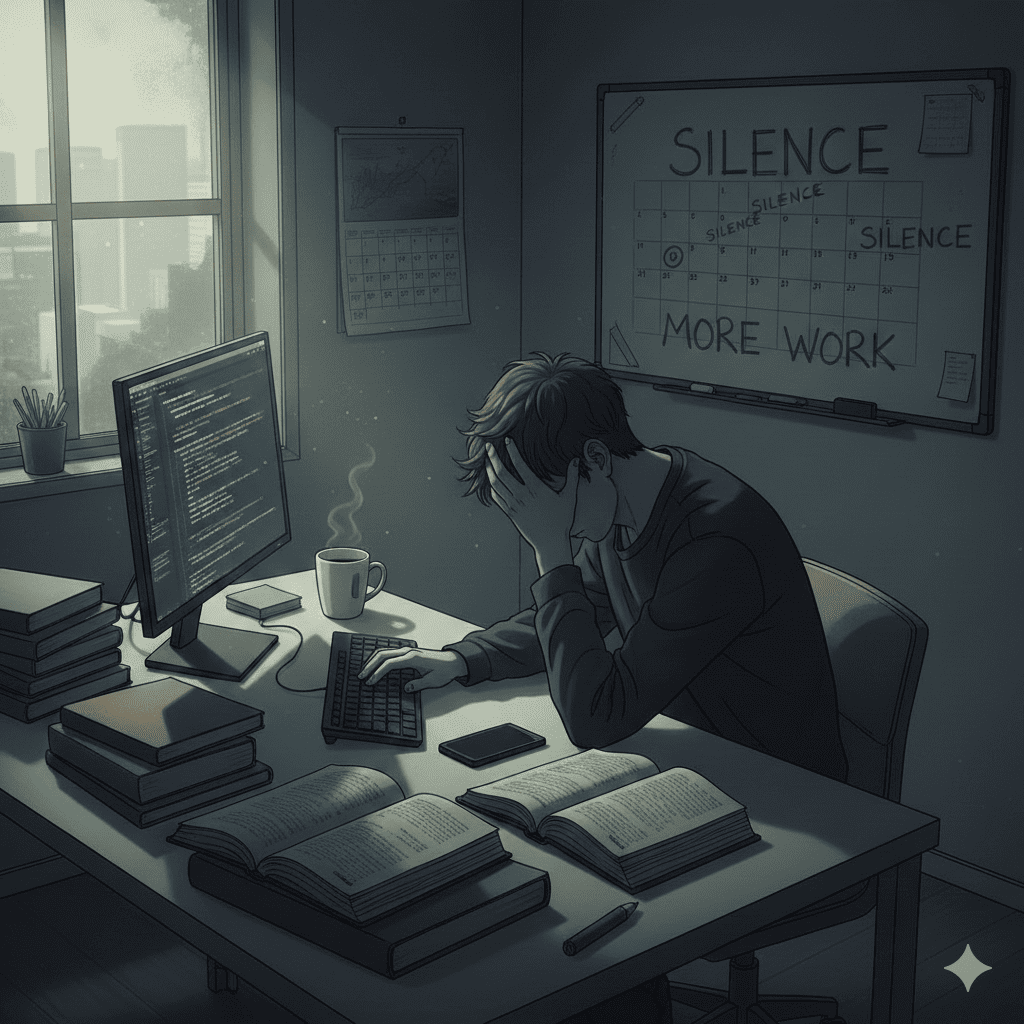
Welcome to silent burnout: a slow, invisible depletion that doesn’t explode — it fades.
No chaos. No crisis. Just a constant sense of being tired in ways sleep can’t fix.
And it’s happening everywhere, across age groups, industries, and countries.
🧟What Silent Burnout Actually Is
Silent burnout isn’t about being overwhelmed by too much work at once. It’s about being worn down by everything over time.
You still function, still show up and get things done.
But internally, something is off.
- You don’t feel motivated — you feel neutral.
- No sadness — still you feel flat.
You don’t feel stressed instead you feel drained.
It’s the kind of burnout that doesn’t trigger alarms because nothing is technically “wrong.”
You’re just… exhausted in a low-volume way.
And that’s what makes it dangerous.
🧟Why Burnout Got So Quiet
Modern burnout isn’t caused by a single factor. It’s a layered result of how life operates now.
1. Constant Low-Level Pressure
There’s always something to respond to.
A message.
A notification.
An update.
A task.
Even rest comes with pressure — to be productive, optimized, aesthetic, or meaningful.
There’s no clear “off” switch anymore, just different levels of “on.”
That constant hum wears people down.
2. Hustle Culture Went Internal
The loud grind culture of the past decade evolved.
Now, no one needs to tell you to do more — you already feel behind.
You compare yourself to:
- People your age doing better
- People younger doing more
- People online who never seem tired
The pressure isn’t external. It’s internalized.
And that kind sticks.
3. Emotional Suppression Is Normalized
Many people were raised to be “high-functioning.” Complains, falling behind or making it a big deal were a red-flag.
So instead of breaking down, people started to shut down.
Silent burnout thrives where emotional expression is minimized. And this is exactly what’s happening everywhere, around us.
🧟The Symptoms People Ignore
Silent burnout doesn’t announce itself. It shows up as small changes people brush off as personality shifts or phases.
Common signs include:
- Feeling tired even after rest
- Losing interest in things you used to enjoy
- Doing the bare minimum without meaning to
- Feeling detached from goals you once cared about
- Struggling to feel excitement or urgency
- Being productive but emotionally empty
- Thinking “I should be grateful” instead of “I’m not okay”
None of these scream emergency.
That’s the problem.
Related: Self-Perception Psychology and Emotional Healing
🧟Why It’s Global
Silent burnout isn’t limited to one country, culture, or economy.
It shows up differently, but the root is shared. In:
- Fast-paced economies; people burn out trying to keep up.
- Struggling economies; people burn out trying to survive.
- Digital-first cultures; people burn out from constant comparison.
- Traditional cultures; people burn out from unmet expectations and silence.
Silent burnout isn’t just a feeling — it’s showing up in data worldwide.
According to the World Health Organization, burnout is now officially recognized as an occupational phenomenon, linked to chronic workplace stress that hasn’t been successfully managed. But what’s more telling is how it presents.
In a 2025 Gallup report, a supervisor from US described his job as:
I mean, my guys will do anything I ask of them, and I love my guys, but there’s no enthusiasm. I’m not asking anybody to be jumping around because we got work to do, but you can just feel it.Ryan S. | Supervisor
Another study by Deloitte showed that over 77% of young professionals experience burnout symptoms — yet less than half feel comfortable talking about it.
The trend is clear: people aren’t collapsing publicly anymore. They’re quietly disengaging while continuing to function.
Different environments. Same result.
A generation (and beyond) is running on low battery, pretending it’s normal.
🧟Productivity Is No Longer the Goal — Survival Is
A big shift has happened.
People aren’t chasing success the way they used to.
They’re chasing sustainability.
Not “How do I win?”
But “How do I not collapse?”
That’s silent burnout talking.
When daily life feels like maintenance instead of momentum, something’s off.
And no amount of productivity hacks fixes emotional depletion.
Related: Functional Freeze- When You do Everything But Feel Emotionally Stuck
🧟How to Tell If You’re Experiencing Silent Burnout
You might be dealing with silent burnout if:
- You get through your days on autopilot
- Rest doesn’t feel restorative anymore
- You delay things you once cared about, not from laziness but emptiness
- You feel oddly disconnected from your own goals
- You think about “escaping” more than improving
- You function well enough that no one checks in — including yourself
Silent burnout isn’t about inability.
It’s about emotional depletion disguised as normalcy.
If several of these feel familiar, that’s not a personal failure. That’s information.
🧟Why Rest Doesn’t Fix It
Silent burnout isn’t cured by a weekend off.
Because it’s not about being tired — it’s about being disconnected.
Disconnected from:
- Purpose
- Meaning
- Autonomy
- Emotional expression
You can sleep eight hours and still feel empty.
You can take a vacation and still feel numb.
Because the issue isn’t exhaustion. It’s erosion, slow loss of energy, curiosity, and emotional engagement.
🧟The Role of Technology
Technology didn’t create burnout — but it changed its texture.
Everything is faster, more visible and measured. People now live in a constant feedback loop of:
- Metrics
- Likes
- Performance
- Validation
Even identity feels optimized.
When your mind never gets privacy, recovery becomes impossible.
Silent burnout thrives in environments where attention is constantly fragmented.
🧟Why People Don’t Talk About It
Because silent burnout feels invalid.
You’re neither failing nor falling apart. In fact, you’re just… not thriving.
And in a world that only acknowledges extremes, that feels unworthy of concern. A Deloitte report on Mental Health at Work reported that around 3 in 10 workers don’t believe that seniors prefer mental health. And if brought up, they are cornered or mocked.
So people minimize it.
“I’m fine.”
“I’m just tired.”
“It’s not that deep.”
Until it is.
Related: Why Gen-Z Laughs Through Stress?
🧟The Long-Term Cost
Unchecked silent burnout doesn’t stay silent forever.
It often leads to:
- Chronic anxiety
- Depression
- Emotional numbness
- Sudden breakdowns
- Identity loss
- Physical health issues
What starts as quiet depletion can turn into a full stop.
That’s why recognizing it early matters.
🧟What Healing Actually Looks Like
Healing silent burnout isn’t dramatic either.
It’s subtle, intentional and slow.
1. Redefining Productivity
Not everything needs to be optimized.
Not every day needs to be impressive.
Sustainable effort beats constant output.
2. Emotional Honesty
Naming exhaustion matters.
Even when it feels “unjustified.”
You don’t need permission to feel depleted.
3. Creating Real Rest
Real rest isn’t scrolling.
It isn’t distraction.
It’s presence without pressure.
Moments where nothing is expected from you.
4. Meaning Over Momentum
People don’t burn out from hard work.
They burn out from meaningless effort.
Reconnecting with why you do things matters more than doing more.
🧟How People Actually Recover From Silent Burnout
Getting over silent burnout doesn’t look like a dramatic reset. There’s no overnight transformation, no sudden clarity, no “new me” moment.
Recovery is quieter than the burnout itself.
The first shift is understanding that silent burnout isn’t solved by doing more — even if it’s “self-care.” It’s solved by changing how much of yourself you keep giving without renewal.
1. Stop Treating Exhaustion Like a Personal Flaw
Most people try to push through silent burnout because they assume it means they’re unmotivated, lazy, or ungrateful.
They’re not.
Silent burnout is a nervous system response to long-term emotional demand. When you stop blaming yourself for it, your energy doesn’t magically return — but the internal pressure eases. And that matters more than it sounds.
Healing starts when exhaustion becomes something you listen to, not something you argue with.
2. Reduce Emotional Output Before Increasing Rest
Here’s what most people miss: burnout isn’t only about how much you do — it’s about how much you care without return.
Constant emotional output looks like:
- Being available to everyone
- Over-explaining yourself
- Carrying responsibility that isn’t yours
- Staying mentally “on” even when you’re off
Before adding more rest, subtract unnecessary emotional labor. Silence notifications. Say less. Step back from things that drain you quietly.
Rest works better when there’s less leaking out.
3. Rebuild Autonomy in Small, Boring Ways
Silent burnout thrives when life feels mandatory.
Not hard — mandatory.
Start reclaiming control through tiny choices:
- Choosing when to respond, not instantly
- Structuring your day around energy, not expectations
- Letting some things be “good enough”
Autonomy restores motivation faster than inspiration ever will.
4. Create Space Where Nothing Is Expected of You
Scrolling isn’t rest.
Distraction isn’t rest.
Avoidance isn’t rest.
Real recovery happens in moments where:
- You’re not being evaluated
- You’re not producing
- You’re not improving
- You’re not performing identity
Even 10 minutes of expectation-free time daily can slowly reverse emotional numbness.
5. Don’t Wait Until You Feel Better to Change
This part matters.
Most people think they’ll adjust their lives after they feel energized again. Silent burnout doesn’t work like that.
You change first.
The energy follows later.
You don’t need clarity to start healing — you need permission to move differently.
🧟Why This Works?
Silent burnout is slow, so recovery has to be gentle but intentional.
No extremes, reinventions or pressure to be “fixed.”
Just fewer drains, more honesty, and space to feel human again.
That’s how people come back to themselves — quietly, steadily, and for real.
🧟A Cultural Shift Is Coming
Silent burnout is forcing a reset.
People are questioning:
- Work structures
- Success definitions
- Lifestyle expectations
- Emotional norms
Not loudly. Not aggressively.
But deeply.
And that might be the most powerful part.
🧟Final Thoughts
Silent burnout is the most common form of exhaustion today because it blends in.
It hides behind functionality, politeness and productivity.
But just because it’s quiet doesn’t mean it’s harmless.
If you feel constantly drained without a clear reason, you’re not broken.
You’re responding normally to an unsustainable pace.
And recognizing that isn’t weakness.
It’s awareness.
The first step toward a life that doesn’t just run — but actually feels lived.