Outgrowing Someone Doesn’t Make You Cold. Here Is How to Let Go Without Guilt
🏃♀️When Relationships Fade Without Betrayal, Drama or Closure
There comes a point in life where identity stops being abstract and starts becoming social. It is no longer just about understanding yourself in isolation. It is about seeing who still fits once your values, boundaries, and inner direction begin to solidify.
One of the most disorienting experiences in this phase is realizing that some relationships are fading even though nothing obviously went wrong.
There was no betrayal.
No argument.
No defining moment that explains the distance.
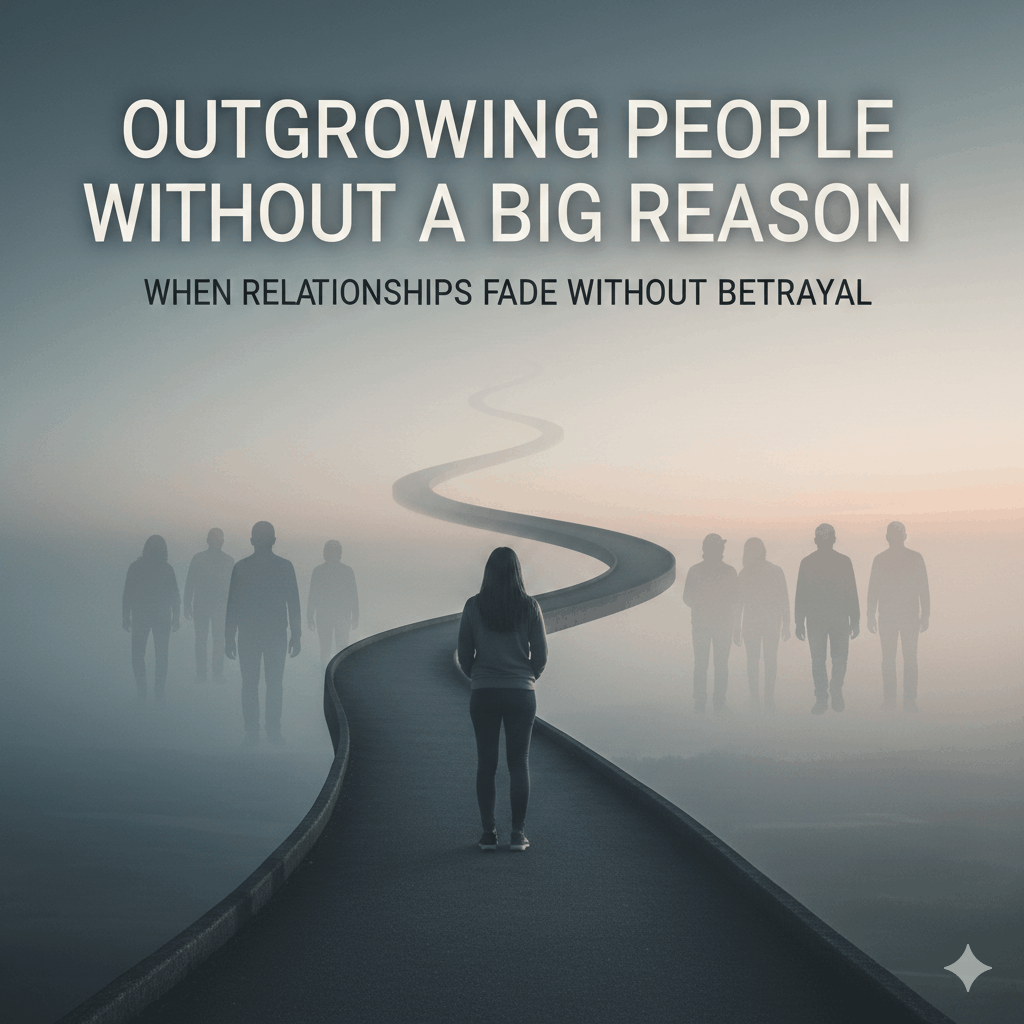
Still, the connection no longer feels alive.
This kind of ending is hard to talk about because it does not fit the stories we are used to. We are taught that relationships end because someone messes up. We look for villains, proof, or closure conversations. When none of those exist, the loss feels illegitimate, almost like you are not allowed to grieve it.
Yet this is one of the most common relational shifts during identity development when you outgrow people without any “big” reason.
🏃♀️Why We Struggle With Endings That Have No “Reason”
Culturally, we associate endings with failure. Something must have broken. Someone must be at fault. Closure is framed as a clear conversation where everything is named and resolved.
That narrative leaves very little space for quiet transitions.
So when a relationship fades without conflict, the mind starts searching for meaning. You replay old conversations, analyze tone changes and often wonder if you are avoiding intimacy or being emotionally lazy. The lack of a concrete reason can feel more unsettling than a dramatic fallout.
From a psychological perspective, this discomfort makes sense. Humans process loss more easily when there is a clear cause. Ambiguous loss, where nothing visibly ends but nothing continues either, is harder for the nervous system to resolve.
Outgrowing someone without a big reason creates exactly that kind of ambiguity.
🏃♀️Identity Differentiation Changes Compatibility
One of the core processes in Phase 3 is identity differentiation. This is the stage where your sense of self becomes more defined, less reactive, and less dependent on external validation. Values sharpen. Boundaries become clearer. Certain dynamics that once felt normal start to feel misaligned.
As this happens, compatibility naturally changes.
You may notice that conversations feel repetitive instead of expansive. Time together feels neutral instead of grounding. You still care about the person, but the connection no longer supports who you are becoming.
This does not mean the relationship failed. It means it was formed around an earlier version of you.
Related: The Pressure to be Okay All the Time
Across identity transitions, this pattern shows up consistently. Relationships built during survival, proximity, or shared circumstances often struggle to adapt once a person’s internal direction shifts. The bond was real, but it was context-dependent.
Growth exposes that context.
🏃♀️Relational Misalignment Is Not a Moral Failure
A common mistake people make during this phase is treating misalignment as a moral issue.
You start asking yourself whether you are ungrateful, disloyal, or selfish. You tell yourself that history should be enough to sustain closeness or assume that effort alone should fix the distance.
In reality, what you are often experiencing is relational misalignment.
Relational misalignment happens when two people are not evolving at the same pace or in the same direction. Neither person is wrong. The relationship simply no longer reflects both identities accurately.
Trying to force alignment where it no longer exists often leads to quiet resentment, emotional withdrawal, or performative closeness. None of those outcomes are healthier than distance.
🏃♀️The Subtle Signs You Are Outgrowing Someone
Outgrowing rarely announces itself. It shows up in small, almost dismissible moments.
- You stop reaching out instinctively.
- You feel drained after interactions that used to feel grounding.
- You share less of your inner world, not out of fear, but out of disinterest.
In my mid-twenties, I started noticing this pattern across multiple friendships. On paper, everything looked fine. We could talk, laugh, and reminisce. Yet afterward, I felt oddly empty. The conversations stayed on the surface, even when nothing was intentionally avoided.
That experience repeated often enough to become a pattern rather than an exception.
What I learned is that emotional connection depends on present-day resonance, not just shared history. When resonance fades, no amount of nostalgia can bring it back in a sustainable way.
🏃♀️Why the Absence of Conflict Creates Guilt
When there is no obvious problem, guilt fills the gap.
You tell yourself to try harder. You wonder if you are abandoning someone who was there for you. There feels a pressure to maintain closeness out of loyalty rather than alignment.
This guilt is especially common for people who were socialized to prioritize harmony and emotional responsibility. You were taught that good relationships require endurance, not evaluation.
However, endurance without alignment often turns into obligation. Obligation eventually erodes sincerity.
Guilt does not always signal wrongdoing. Sometimes it signals that you are choosing something unfamiliar, like growth over familiarity.
🏃♀️Attachment Recalibration During Growth
Another layer to this experience involves attachment recalibration.
As people move through identity development, attachment needs often change. You may become less tolerant of inconsistency, emotional unavailability, or dynamics that require you to shrink. What once felt normal starts to feel costly.
This shift can look, from the outside, like emotional distance. Internally, it often feels like clarity.
It is important to distinguish this from avoidance. Avoidance is driven by fear and urgency. Outgrowing is driven by awareness and calm. There may be sadness, but there is also a sense of inevitability.
| Aspect | Attachment Recalibration | Emotional Avoidance |
|---|---|---|
| Primary Driver | Identity growth and increased self-awareness. | Fear of vulnerability or emotional discomfort. |
| Emotional Tone | Calm, grounded, sometimes sad but clear. | Anxious, urgent, or emotionally shut down. |
| Response to Intimacy | More selective about emotional closeness. | Actively distances from closeness to feel safe. |
| Behavior Pattern | Letting misaligned relationships fade naturally. | Withdrawing abruptly or avoiding emotional engagement. |
| Internal Experience | Clarity about needs and boundaries. | Relief mixed with unease or emotional numbness. |
| Long-Term Impact | Healthier alignment with values and relationships. | Reinforced disconnection and unresolved emotional patterns. |
Learning to recognize this difference is a key emotional skill in this phase.
🏃♀️When Closure Is Not a Conversation
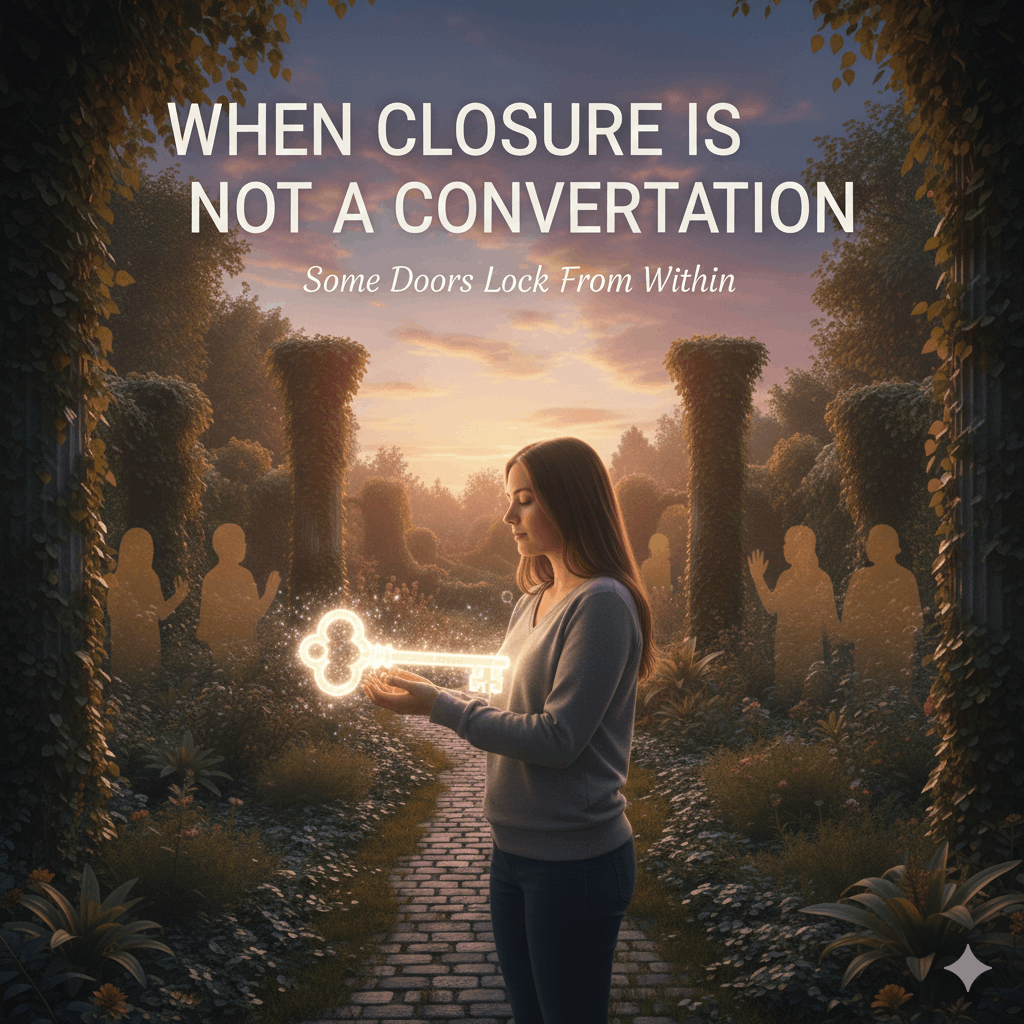
We often assume closure requires dialogue. Sometimes it does. Often, it does not.
For relationships that end without conflict, forcing a dramatic conversation can create confusion rather than resolution. You may end up explaining something that cannot be cleanly articulated, or reopening wounds that were never inflicted.
Psychologically, closure is not something another person gives you. It is something you create by understanding why the relationship no longer fits, even if that understanding stays internal.
This is not avoidance. It is discernment.
This is not about cutting people off or refusing emotional responsibility. It describes a common developmental shift where emotional alignment changes faster than shared history.
🏃♀️Why Some People Take It Personally
When you quietly outgrow someone, they may feel blindsided. From their perspective, nothing changed. From yours, everything did.
This mismatch can create tension, guilt, or pressure to explain yourself in ways that feel incomplete. It is tempting to over-justify or minimize your experience to protect the other person’s feelings.
Still, it is worth remembering that growth is not a group project. You are allowed to evolve even if others do not understand the process in real time.
Related: Anticipatory Regret| Holding Back from Full Attachment and Feeling Loss Before It Happen
Someone else’s hurt does not automatically mean you acted unfairly. It means the relationship reached a limit that could not be negotiated without self-betrayal.
🏃♀️Redefining Loyalty
Social identity often requires redefining loyalty.
Loyalty is not staying in relationships that no longer allow you to show up honestly. It is being truthful about where you can be present and where you cannot.
Staying out of obligation eventually leads to emotional withdrawal, which is far more damaging than distance chosen with integrity. Choosing alignment over familiarity is not abandonment. It is self-respect.
🏃♀️Honoring the Relationship Without Forcing Its Future
One of the most emotionally mature things you can do is honor what a relationship was without insisting it must continue.
You do not need to villainize people you outgrow. You also do not need to invent reasons or amplify flaws to justify the distance. Gratitude and separation can be hold at the same time.
That duality is uncomfortable, but it reflects a stable sense of self.
Some relationships are meant to support you during a particular chapter. They are real, meaningful, and complete without being permanent.
🏃♀️Making Peace With Unfinished Endings
Outgrowing people without a big reason often feels like loss without permission to grieve.
There may be moments of nostalgia, guilt that resurfaces unexpectedly or maybe a lingering urge to explain yourself more than necessary.
None of that means you made the wrong choice.
Ambiguous endings are part of adult identity development. They require trusting your internal sense of alignment more than external validation.
Related: Delayed Emotional Processing- Why Emotions and Feelings Arrive Late
As you let go, something subtle shifts. Your energy returns, inner world feels less crowded, remaining relationships feel fewer, but more resonant.
🏃♀️Coming Back to Yourself Through Letting Go
This pattern shows up repeatedly during identity transitions, especially in early adulthood and early thirties, when values consolidate faster than relationships can adapt.
This article is not a diagnosis. It reflects a common developmental experience observed across identity formation, attachment shifts, and relational realignment.
Phase 3 is not about cutting people off. It is about choosing relationships that match who you are becoming, not who you had to be.
Sometimes that choice is loud.
Sometimes it is quiet. And sometimes, growing up simply looks like letting connections fade without betrayal, without drama, and without needing a dramatic reason why.
If this piece feels personal, feel free to let the world know your opinion in the comments below.