
Marriages of Prophet Muhammad: Context, Purpose, and Lessons Often Missed (Part-1)
🌈 Intro: Why Marriages of Prophet Muhammad (PBUH) Are Often Misunderstood
The marriages of Prophet Muhammad (PBUH) are often discussed, but rarely understood in full context. Some are reduced to numbers, some to controversy, and others are barely mentioned at all. What usually gets lost is why these marriages happened and what they were meant to fix in society.
This article draws from classical sources such as Sirat Ibn Hisham, Kitab al-Tabaqat al-Kabir, and authentic Hadith collections, while also addressing modern misunderstandings that didn’t exist at the time these events unfolded.
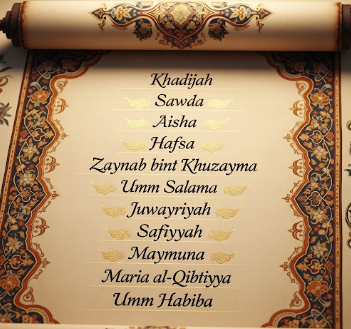
Hi, I am Minhan and I write at Readanica. In this article, instead of long storytelling for its own sake, I explained each marriage just enough to understand the situation — followed by what people often miss today, and the lessons that still matter. First six marriages are discussed in this article while the rest will be discussed in the second part of the article.
🌈 What People Miss When Studying the Marriages of Prophet Muhammad (PBUH)
When people discuss the marriages of Prophet Muhammad (PBUH), they often isolate individual details while missing the broader social, ethical, and historical framework. These marriages are frequently judged through modern cultural assumptions rather than the realities of 7th-century Arabia, where survival, protection, knowledge transmission, and community stability shaped marital decisions. Another common oversight is reducing these women to marital status alone, ignoring their agency, intellect, and societal roles. Classical Islamic sources consistently present these marriages as purposeful, compassionate, and socially transformative — not personal indulgence or norm-breaking behavior. Stripping away historical context distorts both the Prophet’s intent and the legacy of the Mothers of the Believers.
🌈 Marriage Timeline, Children and Historical Impact
| Wife (RA) | Year of Marriage | Marital Status Before | Approx. Duration | Children | Key Historical Impact |
|---|---|---|---|---|---|
| Hazrat Khadijah bint Khuwaylid | c. 595 CE | Widow | ~25 years | 6 | First believer; emotional and financial backbone of early Islam |
| Hazrat Sawdah bint Zam‘ah | 620 CE | Widow | ~9 years | — | Household stability after the death of Hazrat Khadijah (RA) |
| Hazrat Aisha bint Abi Bakr | 623 CE | Unmarried | ~9 years | — | Preservation of hadith and intimate knowledge of the Prophet’s life |
| Hazrat Hafsah bint Umar | 625 CE | Widow | ~7 years | — | Guardian of the preserved Qur’anic manuscript |
| Hazrat Zaynab bint Khuzaymah | 625 CE | Widow | 2–3 months | — | Symbol of compassion and care for widows of martyrs |
| Hazrat Umm Salamah | 626 CE | Widow | ~8 years | Children from first marriage | Legal insight; political and ethical counsel during key events |
1. Hazrat Khadijah bint Khuwaylid (RA): More Than a Marriage — A Foundation
🌈The Marriage, Briefly Told
Before Islam, Mecca revolved around trade, lineage, and reputation. Hazrat Khadijah (RA) already had all three. She was a respected merchant from the Quraysh, known as al-Ṭāhirah for her integrity. Prophet Muhammad (PBUH), though not wealthy, was known for something rarer: trustworthiness.
When she observed his honesty and modesty — especially in business dealings — she didn’t ignore it. She sent a proposal herself. After some hesitation and social formalities, the marriage took place. He was 25. She was 40. And for the next 25 years, this was his only marriage.
When revelation began and fear shook him, she didn’t doubt him for a second. She believed, supported, and stood firm when others walked away.
🌈What People Miss Today
The marriage of Prophet Muhammad (PBUH) to Hazrat Khadijah (RA) is often discussed emotionally, but its social implications are overlooked. Many miss that Hazrat Khadijah (RA) was older, wealthier, and socially superior — and that this was neither hidden nor controversial in her society. Age difference did not define suitability; character did. Another ignored point is that she initiated the proposal, a fact recorded by early historians such as Ibn Ishaq and Ibn Sa‘d, yet frequently erased due to later cultural discomfort.
This marriage also challenges the assumption that leadership and provision must always come from men. Hazrat Khadijah (RA) used her wealth, influence, and emotional strength to support the Prophet (PBUH) long before prophethood — and even more so after revelation. Reducing her to “the first wife” misses the reality: she was his strongest ally when belief came with real risk.
🌈Key Lesson
This marriage teaches that marital worth in Islam is rooted in integrity, trust, and mutual respect, not age, gender roles, or financial hierarchy. It also affirms that women can take initiative in marriage and leadership without compromising dignity. Hazrat Khadijah (RA) shows that support, belief, and partnership are forms of worship.
Scholarly references: Ibn Ishaq; Ibn Sa‘d, Kitab al-Tabaqat al-Kabi
2. Hazrat Sawdah bint Zam‘ah (RA): Comfort When Life Was Heavy
🌈The Marriage, Briefly Told
After Hazrat Khadijah’s (RA) death, the Prophet’s home felt empty. This wasn’t just emotional loss — it was the loss of stability. Hazrat Sawdah (RA) was a widow, older, with children, and known for her kindness and light-hearted nature.
The marriage wasn’t about romance. It was about companionship, care, and rebuilding a household during a painful phase.
🌈What People Miss Today
Hazrat Sawdah’s (RA) marriage is often skimmed over, yet it reflects one of the most human chapters in the Prophet’s life. After the death of Hazrat Khadijah (RA), this marriage was not about romance — it was about stability, companionship, and care. Many overlook that Hazrat Sawdah (RA) was a widow, older, and already a mother, worried herself about being a burden.
Another missed point: this marriage normalized joy and emotional ease in the household. Hazrat Sawdah (RA) was known for her humor and generosity, reminding us that faith and warmth are not opposites. Reducing marriage to passion or status erases this dimension of mercy.
🌈Key Lesson
This marriage shows that emotional support is a legitimate purpose of marriage in Islam. It also honors widows and older women, challenging the idea that marital value decreases with age or circumstance. Care, companionship, and kindness are not secondary needs — they are central.
Scholarly references: Sahih al-Bukhari; Ibn Sa‘d
3. Hazrat Aisha bint Abi Bakr (RA): A Marriage That Preserved Knowledge
🌈The Marriage, Briefly Told
Hazrat Aisha (RA) was the daughter of Abu Bakr (RA), the Prophet’s closest companion. The marriage took place in Madinah, and she grew up in the Prophet’s household — observing him not as a public leader, but as a human being.
After his passing, she didn’t fade into the background. She became a teacher, jurist, and reference point for the Ummah.
🌈What People Miss Today
Discussions around the marriage of Prophet Muhammad (PBUH) to Hazrat Aisha (RA) are often shaped by modern assumptions rather than historical reality. Two misunderstandings appear most frequently.
Applying modern definitions of childhood and adulthood to a 7th-century society.
In early Arabian culture — like much of the pre-modern world — adulthood was defined by physical maturity and social responsibility, not a fixed numerical age. Classical scholars such as Ibn Hajar al-‘Asqalani and historians like Ibn Kathir discuss this norm without treating it as unusual. Hazrat Aisha (RA) herself never described her marriage as harmful, forced, or traumatic. Instead, she later spoke about her life with clarity and confidence, narrating thousands of hadiths and openly teaching senior companions.
Judging this marriage without historical context leads to conclusions unsupported by either the people of that era or the primary sources.
Assuming Hazrat Aisha (RA) lacked agency.
Historical records show the opposite. Hazrat Aisha (RA) became one of the most articulate and intellectually assertive figures in Islamic history. She corrected companions, debated legal rulings, and challenged misunderstandings — contributions well documented in Sahih al-Bukhari, Sahih Muslim, and early biographical works.
Beyond these misconceptions, many discussions overlook the deeper purpose of this marriage: the preservation of knowledge from within the Prophet’s household. Hazrat Aisha (RA) had direct access to his daily worship, ethics, and family life — knowledge that could not have been preserved from the outside.
Reducing her marriage to controversy strips away its true legacy.
🌈Key Lesson
The marriage of Prophet Muhammad (PBUH) to Hazrat Aisha (RA) shows that preserving knowledge is a form of leadership. It also challenges the assumption that women’s roles in early Islam were limited or passive. Through Hazrat Aisha (RA), the Muslim community gained access to essential knowledge that might otherwise have been lost.
4. Hazrat Hafsah bint Umar (RA): Trust and Responsibility
🌈The Marriage, Briefly Told
Hazrat Hafsah (RA) was daughter of Umar ibn al-Khattab (RA) and she was widowed at a young. After rejected proposals and silence from others, the Prophet (PBUH) married her, restoring her dignity and security.
Later, she would be entrusted with something no one else was.
🌈What People Miss Today
Hazrat Hafsah’s (RA) story is often framed around proposals, but the deeper meaning is missed. She was a young widow, and her father, Hazrat Umar (RA), actively sought a dignified future for her — showing Islam’s insistence on social responsibility toward widows. Another overlooked aspect is her intellectual trustworthiness. After the Prophet’s (PBUH) passing, the preserved manuscript of the Qur’an was entrusted to her, a role requiring discipline, accuracy, and reliability.
This marriage was not symbolic — it was strategic for the preservation of revelation.
🌈Key Lesson
Hazrat Hafsah (RA) teaches that piety includes safeguarding knowledge. Her life highlights patience after loss and the honor Islam gives to widows, as well as women’s role in preserving foundational texts. Pre-Islamic Arab refused any rights for women while Islam allowed the most sacred responsibility of preservation of the Holy Quran to Hazrat Hafsah (RA) emphasizing responsibility and leadership.
5. Hazrat Zaynab bint Khuzaymah (RA): Impact Isn’t Measured in Time
🌈The Marriage, Briefly Told
Known as Umm al-Masakin, Hazrat Zaynab (RA) was already devoted to the poor before her marriage. Widowed after Uhud, she married the Prophet (PBUH) and passed away only months later.
🌈What People Miss Today
Hazrat Zaynab bint Khuzaymah (RA) is often barely mentioned because her marriage was short — but that brevity is the point many miss. Known as Umm al-Masakin (Mother of the Poor), she was a widow of a martyr. The Prophet’s (PBUH) marriage to her was an act of social care, not longevity or legacy-building.
Modern discussions often equate value with duration. Early Islam measured it by impact.
🌈Key Lesson
This marriage reinforces that marriage can be an act of compassion and dignity, even if it is brief. Hazrat Zaynab’s (RA) legacy reminds us that serving the vulnerable defines greatness — not how long one is remembered.
Scholarly references: Ibn Sa‘d; Sirat Ibn Hisha
6. Hazrat Umm Salamah (RA): Wisdom in Action
🌈The Marriage, Briefly Told
Hazrat Umm Salamah (RA) had lost her husband and was left with children. Known for intelligence and patience, she married the Prophet (PBUH) later in his life.
She didn’t just listen — she advised.
Hazrat Umm Salamah (RA) is frequently praised, yet her leadership role is still underplayed. As a widow with children, she openly expressed her concerns before marriage — jealousy, age, responsibility — and was met with reassurance, not dismissal. This alone challenges the idea that women’s voices were sidelined.
Her wisdom later shaped critical moments, including the Treaty of Hudaybiyyah, where her counsel guided the Prophet (PBUH) during a tense standoff. Many overlook that political wisdom came from within the household.
🌈Key Lesson
This marriage highlights that consultation (shura) includes women, and that emotional intelligence is a form of leadership. Hazrat Umm Salamah (RA) models resilience, honesty, and strategic thinking grounded in faith.
What These Marriages Say to the Modern World?
🌈Marriage in Islam Was About Responsibility, Not Control
These marriages weren’t built on dominance or ownership. They addressed real social needs — care for widows, emotional stability, and community protection. Instead, marriage was a responsibility, not a tool for control.
🌈Women’s Consent and Choice Were Non-Negotiable
From Hazrat Khadijah (RA) initiating her proposal to others openly expressing their concerns before marriage, consent was central. Being forced, silenced, or ignored was never the model — even if later cultures tried to normalize it.
🌈Financial and Intellectual Independence:
Women in the Prophet’s household owned wealth, managed it, and taught others. Hazrat Khadijah’s (RA) finances remained hers. Hazrat Aisha (RA) taught scholars. Knowledge and money were not male-only spaces.
🌈Restrictions Today are Cultural
A hard truth: many limits placed on women today — choosing a spouse, speaking publicly, leading, or questioning — don’t come from Islamic sources. They come from habits passed down and labeled “religion” over time.
🌈Early Muslim Women Had More Voice Than We Admit
The Mothers of the Believers advised leaders, shaped legal thought, and influenced political decisions. They weren’t hidden figures. If anything, their participation feels more expansive than what many women experience today.
🌈The Bigger Reminder for Today’s World
These marriages weren’t meant to stay in history books. They offer a framework where dignity, compassion, and accountability coexist. Revisiting them isn’t about defending the past — it’s about correcting the present.
Every marriage teaches important lessons about social responsibility, faith, patience, and compassion. First six wives of Prophet Muhammad (PBUH) are listed in detail in this article, along with information about their names, biographies, and the historical setting of their marriages. The rest will be in shared in the next part of the article.
![Humaira Asghar Ali Biography – Latest News Today [Updated October 2025]](https://readanica.me/wp-content/uploads/2025/07/humaira-asghar-ali-biography-death-career-1317693753.png)

Nice 👍
👍👍
Such an amazing and informative content .