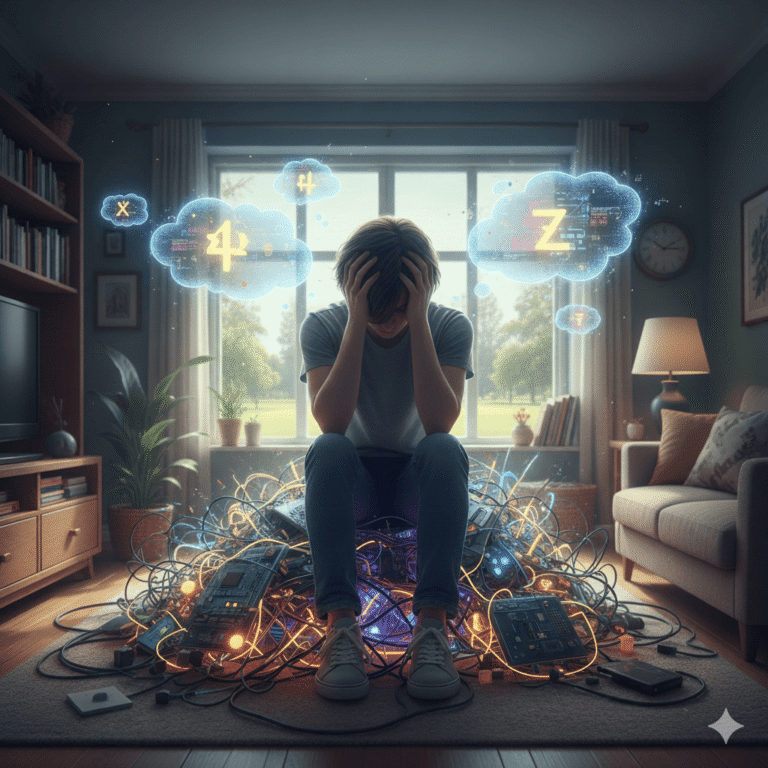
Are you Habitual of Taking Stress? Why Calm Feels Uncomfortable?
🌂Why Peace Can Trigger Anxiety after Long-Term Stress
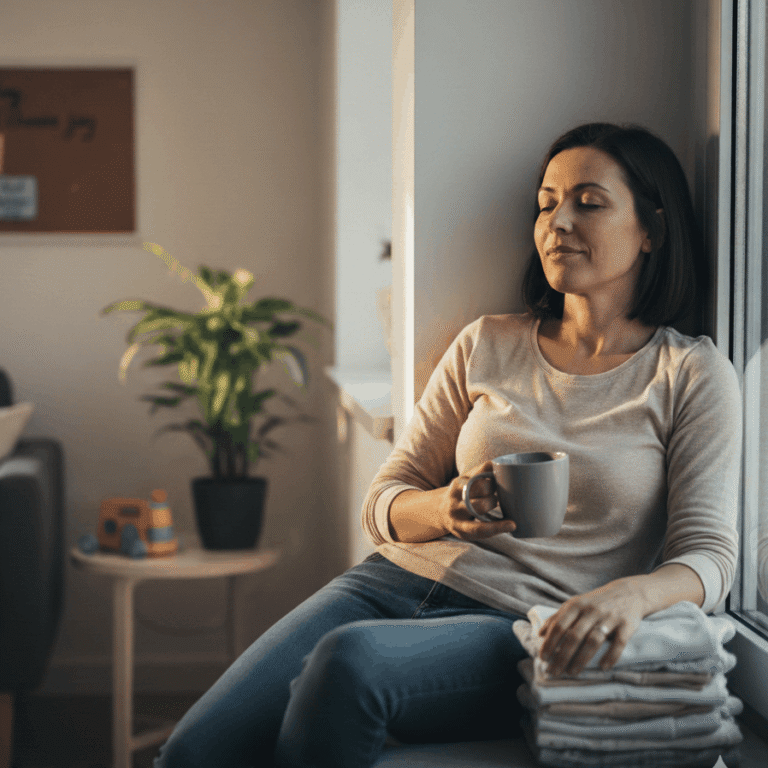
Calm is supposed to feel like relief.
So why does it sometimes feel unbearable?
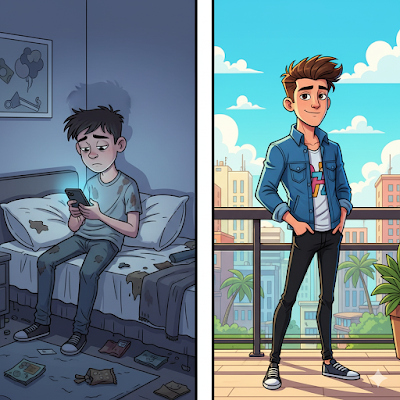
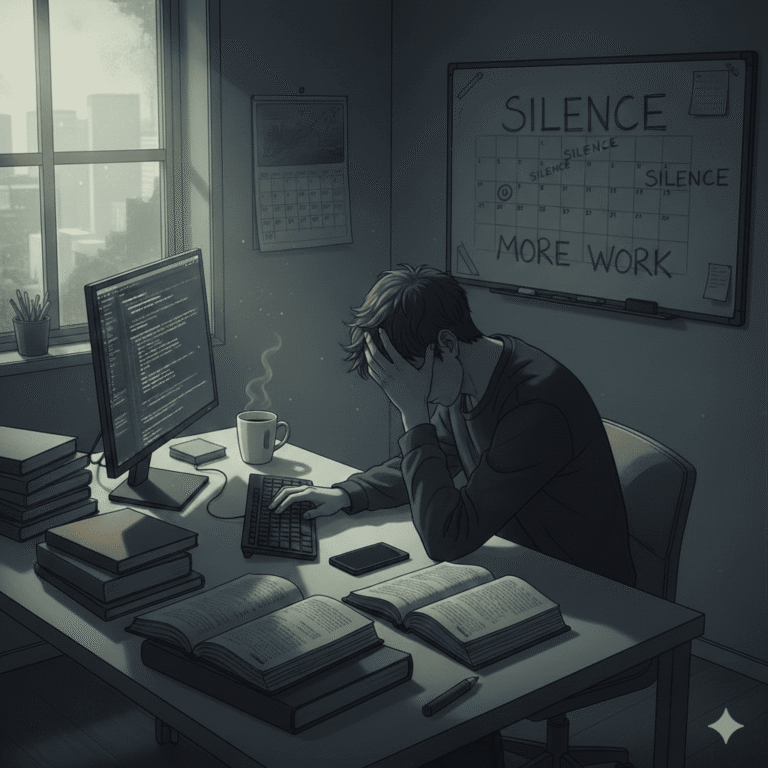
For many people, anxiety does not peak during chaos. It arrives after the chaos ends. The deadline passes. The crisis resolves. The noise stops. But now instead of peace, the body tightens. The mind looks for problems. Silence feels threatening.
This reaction feels confusing and often shameful. People wonder why they cannot enjoy what they worked so hard to reach.
However, when calm feels uncomfortable, it is rarely psychological weakness. It is adaptation.
After long periods of stress, the nervous system learns to survive through urgency. Stillness becomes unfamiliar. Quiet feels unsafe. The brain, trained to scan for danger, treats peace like a warning sign.
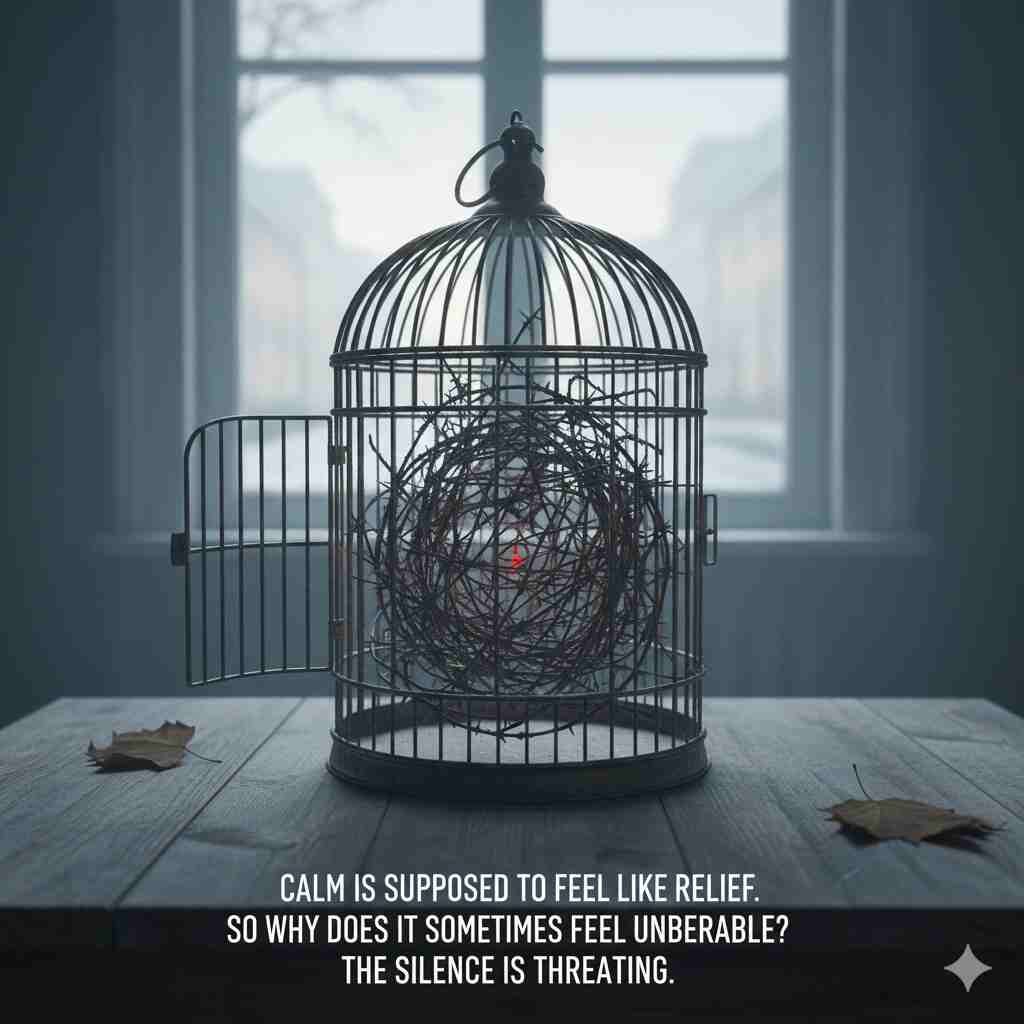
Why Peace Can Trigger Anxiety after Long-Term Stress?
Psychology and neuroscience offer a clear explanation to this. Calm is not always interpreted as safety. For a brain conditioned by pressure, calm can register as uncertainty.
Hi, I am Minhan and I write at Readanica. This article explores why calm feels uncomfortable after prolonged stress, what is happening at the brain and nervous system level, and how to re-enter calm without triggering anxiety.
🌂Stress as a Learned Baseline
Chronic stress rewires what feels normal.
When someone lives under pressure for months or years, their nervous system adapts to it. High alert becomes the default setting. Cortisol and adrenaline stay elevated. The brain learns to associate movement, urgency, and vigilance with survival.
Over time, this creates a new baseline.
Research from the American Psychological Association shows that prolonged stress changes how the brain processes threat and safety cues, particularly in the amygdala and prefrontal cortex.
As a result, calm does not register as safety. It registers as unfamiliar territory.
Therefore, when external stress disappears, the internal system does not automatically recalibrate. Instead, it keeps scanning for danger that no longer exists.
This is why silence can feel loud, rest can feel wrong and stillness can trigger anxiety.
🌂Why the Body Reacts Before the Mind?
The body always reacts faster than conscious thought.
From a neurological perspective, safety detection happens below awareness. According to Polyvagal theory, the nervous system continuously evaluates the environment for cues of threat or safety before the rational brain weighs in.
After long stress, the body becomes efficient at threat detection and calm disrupts that pattern.
Instead of signaling relief, calm creates ambiguity. And ambiguity is uncomfortable for a system that is trained to expect chaos.
This explains why people often say things like:
- I feel anxious when nothing is wrong
- I cannot relax even when I have time
- Peace makes me restless
These reactions are not imagined. They are physiological.
Related: Self-perception and Emotional Healing
🌂When Calm Feels Uncomfortable at the Nervous System Level
At this stage, calm feels uncomfortable because the nervous system confuses peace with vulnerability.
In high-stress environments, staying alert equals staying safe. Letting guard down feels dangerous. This pattern is common in people who have experienced:
- Long work burnout
- Chronic financial stress
- Caregiver fatigue
- Trauma or prolonged uncertainty
Neuroscience research shows that the brain prioritizes prediction over accuracy. It prefers a known threat over an unknown state
Therefore, calm triggers anxiety not because something is wrong, but because the system is waiting for impact.
Peace becomes the moment before something bad happens.
🌂The Role of Identity and Productivity
Stress does not only shape biology. It shapes identity.
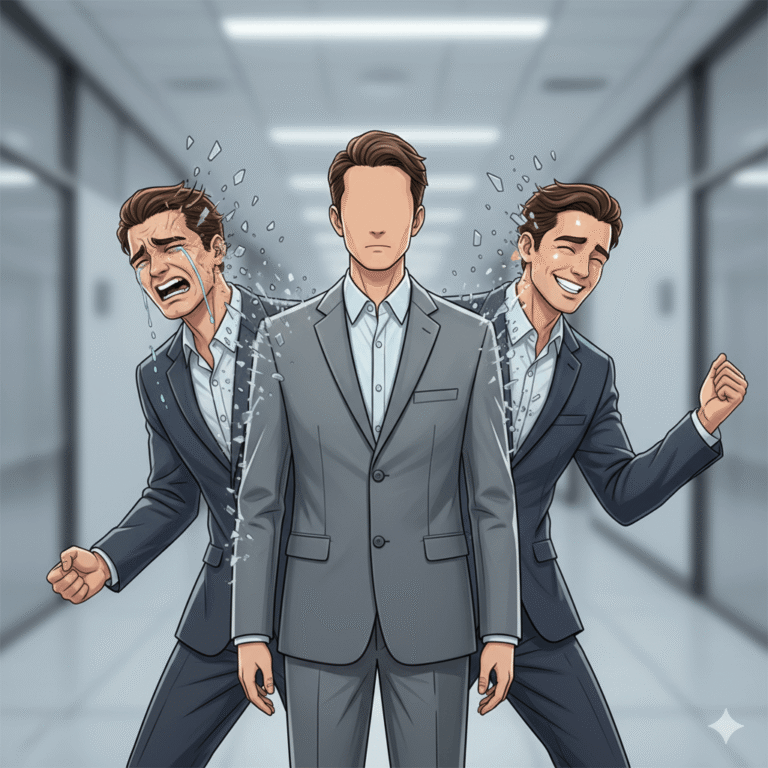
Many people unconsciously tie self-worth to movement. Productivity becomes proof of value. Busyness becomes emotional armor.
When calm arrives, that armor comes off.
Suddenly, questions surface:
- Who am I if I am not busy
- What do I do when I am not needed
- Why do I feel empty when things slow down
Psychologists describe this as role collapse. When stress-driven roles disappear, the mind scrambles to fill the gap. Role collapse is most common in individuals who retire from their service recently.
This makes calm feel destabilizing instead of grounding.
🌂Calm Versus Safety
Studies in trauma psychology consistently show that people may unconsciously return to stressful environments because those environments feel predictable. This does not mean people enjoy stress. It means the nervous system prefers certainty over peace it does not recognize.
| Dimension | Calm | Safety |
|---|---|---|
| What it is | An external condition or moment of stillness | An internal nervous system state |
| Where it comes from | Environment and circumstances | Learned biological and emotional responses |
| After long stress | Feels unfamiliar or unsettling | Often missing or unstable |
| Predictability | Can feel uncertain or exposed | Feels known, expected, and contained |
| Body response | Triggers scanning or restlessness | Allows relaxation and regulation |
| Why discomfort happens | Lacks familiar control cues | Has not yet been rebuilt internally |
That is why calm feels uncomfortable before it feels relieving.
🌂Common Signs This Is Happening
This pattern often shows up in subtle ways, including:
- Feeling restless during vacations
- Anxiety increasing on weekends
- Trouble sleeping when life stabilizes
- Overthinking during quiet moments
- Creating problems when none exist
These behaviors are not self-sabotage. They are recalibration attempts.
The system is trying to make sense of a new environment.
🌂How Long-Term Stress Shrinks Tolerance for Ease
Another factor is tolerance.
Stress builds tolerance for intensity whereas calm requires tolerance for stillness.
According to research on emotional regulation, people exposed to chronic stress often lose capacity to sit with low stimulation states. In simple terms, the nervous system forgets how to rest.
That does not mean calm is impossible. It means it has to be relearned.
🌂What Helps Calm Become Safe Again
The solution is not forcing relaxation. That often backfires.
Instead, the goal is gradual nervous system retraining. Evidence-based approaches include:
- Short, frequent rest periods instead of long breaks
- Gentle routines that create predictability
- Somatic practices like slow walking or breathing
- Mindfulness focused on sensation, not silence
Calm must become familiar before it becomes comfortable. Moreover, self-judgment often sneaks in:
- Why can’t I enjoy this
- What is wrong with me
- Other people relax just fine
That inner criticism reinforces stress pathways.
Psychological studies confirm that self-compassion reduces stress more effectively than control strategies.
So, gentleness can rewire calm; not discipline.
☂️The R.E.S.T. Framework for Relearning Calm
To make this practical and credible, here is a simple evidence-based model that clinicians often reference informally. We will call it the R.E.S.T. Framework.
This framework explains how people gradually re-associate calm with safety instead of threat.
- R — Regulate:
Calm cannot be forced. Gentle regulation like slow breathing or light movement must come before stillness. - E — Expose:
Short moments of quiet work better than sudden silence. The nervous system learns through repetition, not pressure. - S — Signal safety:
Predictable routines, warm environments, and familiar sounds help the brain reinterpret calm as non-threatening. - T — Tolerate discomfort:
Mild unease during calm isn’t danger. Staying present teaches the brain that nothing bad follows stillness.
🌂Calm is a Skill
One of the most important reframes is this. Calm is not something you fall into. It is something you build. Just like strength or endurance, calm develops through exposure and recovery cycles. After long stress, the nervous system needs time to trust quiet again. This does not mean peace is fake. It means peace is unfamiliar.
And unfamiliar things always feel uncomfortable first.
🌂What This Means Moving Forward
If calm feels uncomfortable, it does not mean you are broken. It means you survived something intense.
Your nervous system learned how to protect you. Now it needs help learning that protection is no longer required.
That transition is not instant. It is layered. It is human.
Peace does not arrive as relief. It arrives as practice.
And once it settles, it feels less like silence and more like space.
☂️A Gentle Next Step
If this resonates, do not rush to fix it.
Start small. Notice moments of ease without trying to extend them. Let calm pass through instead of trapping it.
If you want deeper tools for retraining stress patterns, grounding attention, and rebuilding safety at your own pace, speak with a licensed mental health professional.
Calm becomes safe when you let it arrive slowly. And you are allowed to learn it again.
You may also want to know about why being seen feels so uncomfortable. This article kicks off a series about unnamed internal experiences — the feelings people live with daily but don’t have language for, tools for, or validation around. The goal isn’t just to name them — it’s to help you work with them.
🌂References and Further Readings:
- https://www.ncbi.nlm.nih.gov/pmc/articles/PMC5678449/
- https://www.psychologytoday.com/us/blog/thriving-with-anxiety/202308/can-trying-to-relax-make-you-more-anxious
- https://pmc.ncbi.nlm.nih.gov/articles/PMC3108032/
- https://psycnet.apa.org/manuscript/2024-79358-001.pdf