Why Bullying Still Persists? Power, Silence and Systems That Let It Happen
Bullying isn’t a mystery anymore.
We’ve defined it, studied it, campaigned against it, printed posters, launched helplines, and built entire awareness weeks around it.
And yet — it persists.
Power, Silence, and the Systems That Let It Happen
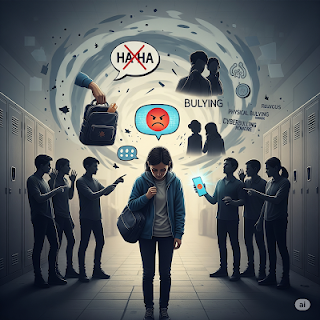
In many states of US, UK and even globally, schools, workplaces, online spaces, and even elite institutions, bullying hasn’t faded. It’s adapted. It’s quieter in some places, louder in others, and disturbingly normalized almost everywhere.
Hi, I am Minhan and I write at Readanica. This article isn’t about what bullying is.
It’s about why it refuses to disappear, even when society claims to oppose it.
Why Bullying Survives?
Bullying survives because it serves a purpose.
Most conversations about bullying stop at behavior.
That’s the mistake.
Bullying is not random cruelty — it’s a power strategy.
Across cultures, ages, and platforms, the same pattern repeats:
- someone feels threatened, invisible, or unstable
- someone else becomes a tool to restore dominance
That’s why definitions from UNICEF, UNESCO, and the Anti-Bullying Alliance all converge on one core element:
👉 imbalance of power
Not anger.
Not misunderstanding. Seek of power.
Someone wants it while someone gets trapped under it.
Types of Bullying:
| Type of Bullying | What It Involves |
|---|---|
| Verbal Bullying | Name-calling, insults, threats, gossip, or repeated verbal humiliation that damages confidence and social standing. |
| Physical Bullying | Hitting, kicking, pushing, slapping, or using physical force to intimidate or cause harm. |
| Non-Verbal Bullying | Threatening gestures, invading personal space, manipulative body language, or silent intimidation. |
| Cyberbullying | Harassment, humiliation, impersonation, threats, or rumor-spreading through digital platforms and social media. |
| Emotional Bullying | Manipulation, isolation, exclusion, fear-inducing behavior, and psychological control over time. |
| Religious Bullying | Mocking or targeting individuals based on religious beliefs, practices, or spiritual identity. |
| Racial Bullying | Discrimination, exclusion, or abuse based on race, ethnicity, color, or cultural background. |
| Sexual Bullying | Unwanted sexual comments, gestures, harassment, body shaming, or gender-based intimidation. |
The Power Myth That Serves Bullying
In theory, modern societies reject domination.
In practice, we reward it.
Several cultures around the globe:
- praise assertiveness
- mislabel dominance as leadership
- excuse aggression as confidence
- interpret silence as weakness
Bullying thrives in environments where:
- power is visible
- accountability is uneven
- consequences depend on status
Which explains why bullying doesn’t just happen in playgrounds — it happens in:
- schools with zero-tolerance posters
- corporate offices with HR departments
- military institutions
- elite universities
- online communities with moderation rules
Awareness didn’t kill bullying.
Hierarchy protected it.
Related: Why We Pretend Online? Dark Humor and Digital Masks
When Victims Become Bullies: Survival, Not Sadism
One of the most uncomfortable truths — especially for educators and policymakers — is this:
Some bullies were once victims.
Not because they “turned evil,” but because power feels safer than vulnerability.
Psychologists often describe this as a defensive adaptation:
- strike first so you’re not targeted
- dominate so you’re not humiliated
- control so you’re not exposed
This doesn’t excuse the harm — but it explains why punishment alone doesn’t work.
If bullying were just about bad behavior, suspension would fix it.
But bullying is about fear wearing authority.
Silence”Strongest Ally of Bullying
Here’s where systems fail — quietly.
Bullying rarely survives because of the bully alone.
It survives because of:
- bystanders who don’t intervene
- institutions that minimize complaints
- adults who call it “character building”
- platforms that act only after damage is done
Surveys in US and UK consistently show:
- most victims do not report bullying
- many who report feel nothing changes
- some feel retaliation gets worse
So, silence becomes policy.
Policy becomes permission.
Digital Spaces Didn’t Create Bullying — They Removed Its Witnesses
Online bullying didn’t invent cruelty.
It removed friction.
No tone and immediate consequence nor a human feedback loop caused cyberbullying to outgrow screens and affect human lives.
Cyberbullying thrives because:
- anonymity lowers empathy
- virality rewards humiliation
- permanence makes harm inescapable
NHS Digital, UK reports sustained links between online bullying and anxiety, sleep disorders, and self-harm in adolescents.
CDC (US). data ties bullying exposure to increased depression, absenteeism, and suicide risk.
This isn’t a “kids online too much” issue.
It’s an architecture problem.
Related: Self-Perception Psychology and Emotional Healing
Why Awareness Campaigns Haven’t Solved It?
Posters don’t stop power dynamics.
Assemblies don’t dismantle hierarchy.
One-week campaigns don’t undo:
- years of social conditioning
- family modeling
- institutional blind spots
Bullying persists because:
- it’s treated as an incident, not a structure
- victims are asked to be resilient instead of protected
- bullies are punished without being understood
- systems prioritize reputation over repair
We focus on optics while the worst continues to operate in incentives.
The Cost of Letting It Continue
Bullying doesn’t end when school does.
Long-term researches link it to:
- chronic anxiety and depression
- PTSD symptoms
- difficulty forming trust
- higher risk of self-harm
- increased likelihood of future violence
In the US, UK and China alike, researches and studies have revealed tht bullying leaves a paper trail that follows people into adulthood — emotionally, socially, neurologically.
The damage isn’t always loud.
It’s often internal, delayed, and dismissed.
Related: The Placebo Effect
So Why Does Bullying Still Exist?
Because it:
- enforces hierarchy
- rewards dominance
- exploits silence
- hides behind culture
- adapts faster than policy
Bullying isn’t a glitch in society.
It’s a symptom of how power is distributed — and protected.

How can Bullying be Countered? 5 Practical Ways
What Actually Reduces Bullying?
Bullying doesn’t end through slogans or assemblies.
It ends when systems change how power is allowed to operate.
1. Early Intervention, Not Delayed Punishment
Most institutions wait until harm escalates before acting. That’s backwards.
Early signals — repeated intimidation, social exclusion, and minor threats — are the most cost-effective moment to intervene. Addressing behavior at this stage prevents normalization and stops patterns before they harden into identity.
Key shift: treat early misconduct as a warning signal, not a “phase.”
2. Consistent Consequences, Regardless of Status
Bullying persists where power protects itself. Popular students, high performers, star employees, or “valuable” figures are often shielded from consequences. This teaches one lesson: harm is acceptable if you rank high enough.
What works: identical accountability standards for everyone — no exemptions based on reputation, talent, or hierarchy.
3. Reporting Channels That Don’t Re-Traumatize Victims
Many reporting systems fail because they burden victims with proof, repetition, and exposure. When people must relive harm just to be believed, silence becomes safer than truth.
Effective systems must:
- allow anonymous or low-exposure reporting
- reduce repeated retelling
- prioritize safety before investigation optics
Reporting should feel protective, not interrogative.
4. Education about Power, Not Just Kindness
Anti-bullying programs often focus on empathy alone. Empathy matters — but it doesn’t explain why browbeating happens. Bullying is about power: who has it, who enforces it, and who benefits when it’s misused.
Real education must include:
- how power dynamics form
- how dominance is rewarded socially
- how bystanders unintentionally reinforce harm
Without this, kindness messaging stays superficial.
5. Systems That Protect Whistleblowers, Not Reputations
Institutions often respond to bullying by protecting their image first. That response guarantees recurrence. When whistleblowers are punished, isolated, or quietly pushed out, others learn the cost of speaking up.
Structural fix:
- explicit protections against retaliation
- transparent timelines for action
- independent review when leadership is implicated
Reputation management should never outweigh safety.
Why These Interventions Work
1. Early Intervention Reduces Long-Term Harm
Research consistently shows that early behavioral intervention prevents escalation into chronic bullying patterns and later violence.
- CDC (U.S.) reports that early identification and school-based intervention significantly reduce peer aggression and future antisocial behavior.
- UK Department for Education emphasizes early response frameworks as more effective than punitive-only approaches.
2. Consistent Consequences Limit Power Abuse
Selective enforcement increases bullying frequency, especially when high-status individuals are protected.
- OECD findings show that inconsistent disciplinary practices correlate with higher bullying prevalence in schools and workplaces.
- Ofsted (UK) identifies unequal accountability as a risk factor for institutional bullying cultures.
3. Safe Reporting Systems Increase Disclosure
Victims report more when systems minimize exposure, repetition, and fear of retaliation.
- U.S. Department of Health & Human Services shows that anonymous and trauma-informed reporting increases early disclosure.
- Equality and Human Rights Commission (UK) highlights that fear of retaliation is a primary reason bullying goes unreported.
4. Power-Aware Education Is More Effective Than Empathy-Only Programs
Programs that explain power dynamics outperform those focused solely on kindness or emotional appeals.
- UNESCO notes that bullying prevention must address power imbalance, not just an individual behavior.
- American Psychological Association (APA) confirms bullying is rooted in dominance, not conflict.
5. Whistleblower Protection Is Critical to Prevention
Institutions with strong whistleblower protections show lower rates of repeated abuse.
- U.S. Government Accountability Office (GAO) reports retaliation fear suppresses reporting and enables misconduct.
Bottom Line
Empathy helps individuals cope.
Structure changes outcomes.
Bullying survives where power is unchecked, reporting is unsafe, and consequences are selective. Break those conditions — and the pattern breaks with them.
Final Thought
Bullying survives not because we don’t recognize it —
but because too often, we tolerate it when it benefits the powerful.
Until power stops shielding cruelty,
bullying won’t disappear — it will just change form.
The real question isn’t why bullies exist.
It’s why systems keep making space for them.
References and Further Reading
- UNICEF — Bullying: What It Is and How to Stop It
- UNESCO GCED — Safe and Inclusive Learning Environments
- EHRC. Preventing Harassment at Work.
https://www.equalityhumanrights.com - Ofsted. Review of Sexual Abuse in Schools and Colleges.
https://www.gov.uk/government/publications/review-of-sexual-abuse-in-schools-and-colleges - NHS Digital (UK) — Mental Health of Children and Young People
- APA. Bullying: What We Know Based on 40 Years of Research.
https://www.apa.org/monitor/nov01/bullying - OECD. PISA Results: Students’ Well-Being.
https://www.oecd.org/education/pisa-2015-results-volume-iii-9789264273856-en.html - GAO. Whistleblower Protections.
https://www.gao.gov/whistleblower-protection - Department for Education (UK). Preventing and Tackling Bullying.
https://www.gov.uk/government/publications/preventing-and-tackling-bullying - UK Legislation. Public Interest Disclosure Act 1998.
https://www.legislation.gov.uk/ukpga/1998/23/contents